


More Regions
2026 Connect Money Next Gen Alternative Investment Awards
Winners
- Akman Bets on Vertical Integration to Unlock Institutional Capital
- Reifsnider Puts Education at the Center of Alternatives Sales
- Hockaday Builds Education-First Approach to Alternatives Marketing
- Royce Connects Tax-Aware Planning With Advisor Development
- Carranza Brings Client-First Planning to Alternative Investments
- Tang Expands Cottonwood’s Global Capital Markets Platform
- Gioseffi Helps Take C-PACE Mainstream
- Jensen Makes Case for Direct Indexing
- Panagiotakopoulos Expands Access to Net Lease Investing
- Palangio Hernandez Builds the Infrastructure Behind Alternatives Growth
- Amarosa Pushes Discipline Over Hype in Tech Investing
- Johnson Turns Complex Capital Stacks into Deals that Close
- Hayes Wants Interval Funds Pitched as Offering a “Defined Exit Path”
- Corral Bets on AI to Widen Access to Alternatives
- Desrosiers Expands the Firm’s Global Investor Base
- Robinson Combines Financial Services Investing With Mental Health Advocacy
- Vankayalapati Targets Tech Companies Powering the Financial Economy
- Clemente Co-Leads Secondaries Push at $95B Private Markets Firm
- De Santis Brings a Global Perspective to Consumer Tech Investing
- Asher Brings $5B in Deal Experience to Monroe’s Alternative Credit Platform
- Conway Brings Endowment Experience to Wallace Foundation
- Laufer Targets AI-Enabled Software for High-Stakes Industries
- Price Leads MLG Capital’s Midwest Investment Push
- Lee Turns Relationships Into Off-Market Retail Deals
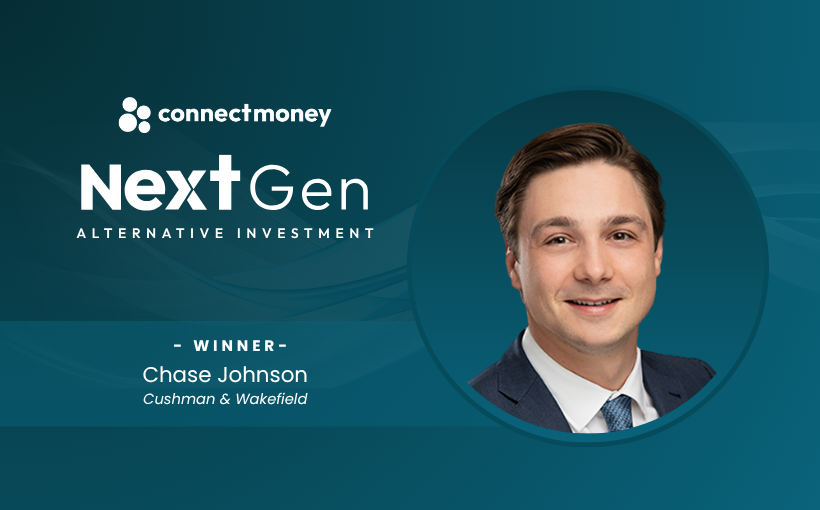

Johnson Turns Complex Capital Stacks into Deals that Close
Managing director combines structured finance execution with AI tools
Chase Johnson’s work in commercial real estate finance centers on making complicated capital structures understandable enough for lenders and investors to act.
As managing director in Cushman & Wakefield’s Equity, Debt & Structured Finance practice, Johnson brings 13 years of industry experience to transactions involving senior debt, mezzanine financing and preferred equity.
He translates financing arrangements into explanations of economics, risks, timing and execution requirements. That approach helps sponsors evaluate how different sources of capital can work together.
One example is a $95.74 million refinancing for Sundance Bay’s 626-unit, two-property Texas multifamily portfolio. Johnson led Cushman & Wakefield’s financing team, arranging $76.24 million in senior debt from Benefit Street Partners and a $19.5 million mezzanine loan from CCL Capital.
Both properties were subject to Housing Finance Corporation income restrictions and consent requirements, adding complexity to coordinating the loans.
Johnson described the transaction as “one of the more structurally involved deals we’ve worked through in recent memory.”
Execution required collaboration with Cushman & Wakefield’s Multifamily Advisory teams in Houston and Dallas-Fort Worth, alongside coordination between the lenders.
A separate, ongoing $50 million multifamily recapitalization illustrates the negotiation required when capital providers’ priorities diverge.
Johnson secured a competitive loan offer, but the lender required repayment of existing preferred equity. With the property still leasing up and the preferred equity basis high relative to current economics, that requirement threatened the financing.
He is negotiating a discounted payoff intended to reconcile the lender’s conditions, the sponsor’s return expectations and the preferred investor’s interest in liquidity. The transaction remains unresolved.
Johnson is also developing technology to organize information supporting these decisions.
A prototype called “The Lender Book” uses artificial intelligence to parse lender flyers and loan quotes into a searchable database. Its objective is to make terms buried in separate PDFs easier to compare.
He previously built an AI-powered daily deal brief using Claude and Microsoft 365. The tool combines recent email activity, calendar information and OneDrive file changes into a prioritized morning dashboard.
Both initiatives address fragmented information across active transactions. Their purpose is to reduce time spent assembling updates while preserving the judgment needed to assess financing options and execute deals.
Johnson’s broader outlook focuses on resolving capital structures established during the 2021-2022 investment cycle. He sees slower lease-ups, elevated preferred equity bases and difficult refinancing economics creating demand for negotiated solutions.
In that environment, he believes advisors’ value increasingly lies in understanding which capital providers can accommodate complicated situations and aligning the parties around workable terms.
His industry involvement includes finance-focused speaking engagements with organizations such as the Urban Land Institute. Within Cushman & Wakefield, he also helps newer professionals navigate transactions and the firm’s platform.
That combination of mentorship, data organization and financing expertise reflects his operating priority: identifying who can close a transaction, under what conditions, and how the capital structure must change to make execution possible. His approach emphasizes coordinated problem-solving across the entire transaction, including situations where an attractive loan alone cannot resolve competing claims on the property’s cash flow.
“Who will actually close this, on what terms, and how fast can I prove it” matters more now than who an advisor knows, in Johnson’s view.