


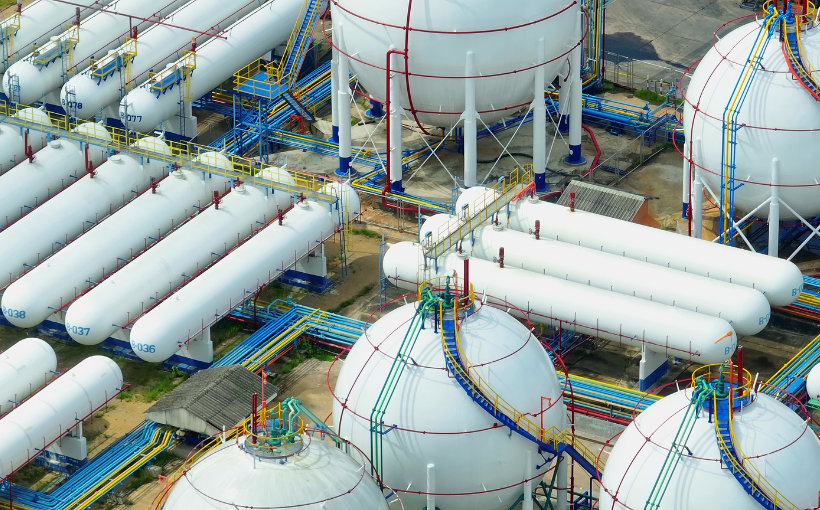

U.S. Power Grid Transformation Fuels Natural Gas Investments
The U.S. power grid is undergoing a monumental transformation, emerging as a compelling investment theme driven by the need to modernize aging infrastructure and meet surging electricity demands from artificial intelligence (AI), electric vehicles (EVs), and onshoring manufacturing. This overhaul requires significant upgrades to grid capacity, with natural gas playing a pivotal role due to its cost-effectiveness, reliability, and rapid deployment.
Rising Electricity Demand and Grid Challenges
The grid faces unprecedented pressure from escalating power needs. AI workloads are projected to drive data-center electricity consumption from 4.4% of U.S. total electricity in 2023 to 12% by 2028, according to industry estimates. The shift toward EVs and clean energy further strains capacity, with experts warning that the current infrastructure is ill-equipped to handle this surge without major upgrades.
Utility spending reflects this urgency. In 2023, capital investment in electric transmission systems reached $27.7 billion, nearly tripling since 2003. Distribution infrastructure, which delivers electricity to end-users, saw spending increase by $6.5 billion. However, the grid’s fragmented structure poses significant challenges:
Lack of Coordination: Transmission planning is divided among regional transmission organizations (RTOs) and local utilities, often operating independently. This leads to inefficiencies, higher consumer costs, and delays in high-voltage transmission projects.
Isolated Interconnections: The U.S. grid is split into three separate interconnections—Eastern, Western, and ERCOT (Texas)—functioning largely in isolation. This limits resilience during extreme weather or grid stress events.
Natural Gas: The Backbone of Grid Expansion
Natural gas is emerging as a critical solution to meet immediate power demands. As a clean, abundant, and domestically sourced energy, it offers significant advantages, including cost and speed and reliability. In 2022, natural gas-fired power plants cost $820 per kilowatt to build, compared to $1,588 for solar and $1,451 for wind, with shorter construction timelines, according to the EIA. Unlike weather-dependent renewables, natural gas provides consistent power, essential for supporting AI data centers and industrial growth.
While renewable energy remains a long-term goal, the immediate need for reliable power underscores natural gas’s role in bridging the gap. The sector has seen robust investment activity in 2025, reflecting its strategic importance.
ArcLight Capital Partners, LLC announced its managed fund has acquired a 25% interest in Natural Gas Pipeline Company of America (NGPL). ArcLight will become the largest owner of NGPL with a 62.5% economic ownership interest, alongside its strategic partner Kinder Morgan, Inc. Additionally, NRG Energy, Inc. (NRG) agreed to a $12 billion enterprise value acquisition of a natural gas generation portfolio and a commercial and industrial (C&I) virtual power plant (VPP) platform from LS Power. And I Squared Capital, in partnership with MPLX LP and Enbridge Inc., has agreed to acquire a significant equity interest in the Matterhorn Express Pipeline (MXP), a 2.5 billion cubic feet per day (Bcf/d) natural gas pipeline linking the Permian Basin to key Texas demand centers and U.S. Gulf Coast LNG export terminals.
In the fundraising space, Kayne Anderson announced the final closing of Kayne Private Energy Income Fund III, L.P., with $2.25 billion in total capital commitments – significantly exceeding its $1.5 billion target. KPEIF III is the alternative asset manager’s third flagship fund since launching the private energy income strategy a decade ago. The fund will continue to primarily focus on acquiring and developing large-scale oil and natural gas assets. Including co-investments and other associated funds, the strategy has raised over $2.8 billion since launching the fundraise.
Meanwhile, in January, Blackstone Energy Transition Partners, the energy investment arm of Blackstone, announced the acquisition of Potomac Energy Center, a 774 MW natural gas-fired power plant in Loudoun County, VA, from Ares Management for a reported $1 billion. In November of 2024, Blackstone announced a $3.5 billion joint venture with EQT Corporation for some of its natural gas pipelines.
Investment Implications
Utilities and private equity firms are channeling billions into transmission and distribution upgrades, with natural gas assets offering attractive returns due to their scalability and reliability. Additionally, natural gas serves as a bridge fuel, supporting the shift to renewables while meeting immediate needs, making it a focal point for energy transition funds. Rising natural gas prices, with Henry Hub futures at $3.621/MMBtu for June 2025 and forecasts of $4.10/MMBtu in 2025, bolster the sector’s appeal. Increased LNG exports, projected to grow 22% in 2025, further drive demand.
The U.S. power grid’s transformation is a multidecade endeavor, with natural gas as a cornerstone of near-term expansion. The recent wave of fundraises and acquisitions underscores investor confidence in the sector’s growth potential, driven by AI, industrial onshoring, and energy transition demands.