DJIA51162.40 -17.47
S&P 5007755.92 -45.85
NASDAQ27170.05 -368.65
Russell 20002788.28 -4.92
German DAX24823.05 -281.31
FTSE 10010441.60 -16.90
CAC 407729.69 -39.52
EuroStoxx 506122.35 -61.80
Nikkei 22569042.11 -993.60
Hang Seng23785.79 -344.71
Shanghai Comp3811.90 -30.29
KOSPI6625.93 -177.97
Bloomberg Comm IDX143.86 1.31
WTI Crude-fut104.44 3.29
Brent Crude-fut91.48 2.45
Natural Gas3.16 -0.10
Gasoline-fut3.33 0.08
Gold-fut4148.00 18.50
Silver-fut59.26 -0.73
Platinum-fut1644.90 6.30
Palladium-fut1127.50 6.50
Copper-fut6.57 -0.07
Aluminum-spot3195.00 0.00
Coffee-fut287.85 -6.05
Soybeans-fut1286.50 -9.25
Wheat-fut683.50 -2.50
Bitcoin81436.86 -1755.95
Ethereum USD2446.65 -118.83
Litecoin62.21 -3.45
Dogecoin0.08 -0.01
EUR/USD1.1196 -0.0070
USD/JPY158.25 0.22
GBP/USD1.3223 -0.0066
USD/CHF0.8332 0.0029
USD IDX102.18 -0.06
US 10-Yr TR5.235 -0.042
GER 10-Yr TR3.4585 -0.0355
UK 10-Yr TR5.4259 -0.0593
JAP 10-Yr TR3.091 0.007
Fed Funds4 0
SOFR3.88 -0.02
High-rise commercial buildings

Sub Markets

Topics

Markets  + Economy  + Latest News  + Regulation  | 
Treasury Working on Anti-Money Laundering Rules for FAs

Treasury Working on Anti-Money Laundering Rules for FAs

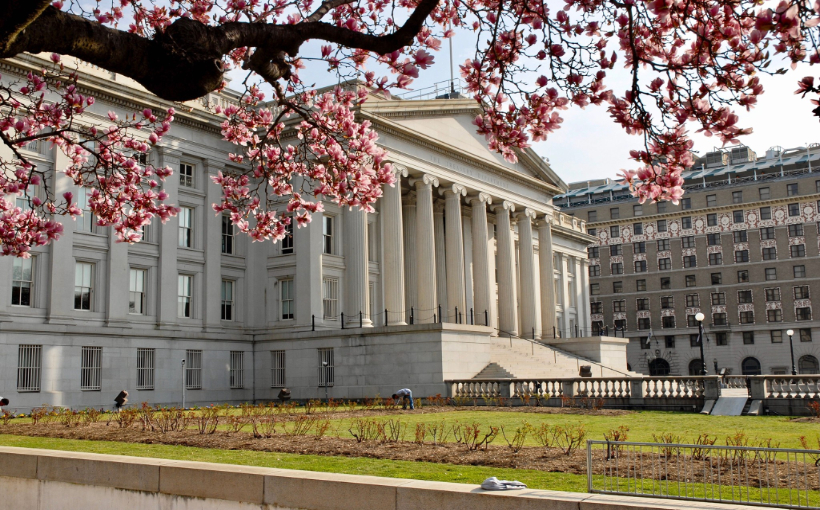
The U.S. Treasury Department is planning to issue an anti-money laundering rule for investment advisors in the first quarter of 2024.

The department stated that it is re-evaluating its initial 2015 rule proposal and plans to submit an amended proposal that will apply its “anti-money laundering and countering the financing of terrorism” (AML/CFT) regime to select investment advisors.

“Investment advisors are not subject to consistent or comprehensive AML/CFT obligations in the United States, creating the risk that corrupt officials and other illicit actors may invest ill-gotten gains in the U.S. financial system through hedge funds, private equity firms and other investment services,” the agency said.

Treasury proposed a rule in 2015 that would have applied AML requirements to hedge funds, private equity managers, and certain other advisors, who do not currently have to reveal the names of beneficial owners, but lobbying efforts by those industries contributed to the rule’s demise.

Treasury noted at the time that it is “possible for money launderers to evade scrutiny more effectively by operating through investment advisors rather than through broker-dealers or banks directly.”

Connect

Inside The Story

U.S. Treasury Department

About Joe Palmisano

Joe Palmisano is editorial director of Connect Money, where he oversees daily coverage of alternative assets, direct investments, financial advisory and the economy. He brings three decades of experience as a financial journalist, analyst and portfolio manager. Before joining Connect Money, Palmisano wrote for The Wall Street Journal, covering foreign exchange, global fixed-income and equity markets. He later served as a senior research analyst and portfolio manager, producing market analysis and managing foreign exchange and U.S. equity portfolios for FX Concepts. His work has also appeared in SFO Magazine and CMT Association publications. Palmisano earned a bachelor’s degree in finance from The American University and holds the Chartered Market Technician (CMT) designation and is a member of the CFA Institute.