


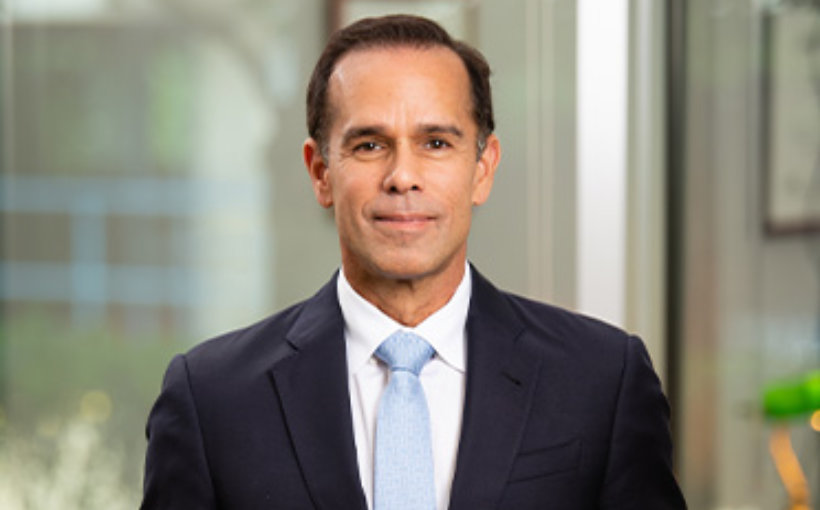

Thriving in Private Markets Amid Volatility: Q&A with Red Oak’s Ray Davis
In a difficult fundraising landscape for private markets, Red Oak Capital Holdings has distinguished itself by adhering to its core competencies and offering structural flexibility across the capital stack, from GP equity to senior debt. Ray Davis, Red Oak’s Chief Strategy Officer & Managing Principal, shares insights on what resonates with investors, emphasizing the firm’s investment approach.
Against a backdrop of market volatility and fluctuating interest rates, Davis discusses its disciplined yet adaptable capital deployment strategies, current investor sentiment in private real estate debt, and high-value opportunities in the sector.
Looking toward the second half of 2025, Davis provides his outlook on capital flows and key indicators for market shifts, underscoring its focus on selective, high-conviction investments to achieve consistent performance.
Davis identifies compelling relative value in asset-backed lending and niche sectors like industrial and residential, anticipating improved capital flows for disciplined managers, while monitoring signals like tighter spreads and bank retrenchment.
CM: Fundraising across the private markets has been challenging for many managers. What’s been resonating with Red Oak’s LP base, and how have you adapted your messaging or offering?
RD: In this environment, staying true to core competencies has been critical—and it’s allowed Red Oak to preserve and sharpen its competitive edge. What’s resonating with our LPs is our structural flexibility—we can invest across the sponsor’s capital stack, from GP equity to senior debt. That’s rare.
In volatile markets, our ability to fill capital stack gaps with tailored solutions sets us apart. Transparency, consistent returns, and real alignment still matter. LPs want to know who’s in the deal, how we’re protecting the downside, and where we’re taking risk. We’ve leaned into frequent reporting, open-book underwriting, and co-investment opportunities. In a crowded field, execution—not promises—is what cuts through.
CM: How is Red Oak approaching capital deployment in this environment? Are there strategies investors are using successfully to raise and deploy capital—such as syndications, evergreen funds, or all-cash offers? Has your playbook evolved in terms of timing, structure, or market entry?
RD: We’re staying disciplined but nimble. Our priority is high-quality sponsors and projects with smart structures—ones that hold sponsors accountable but support execution. We’re favoring shorter-duration paper and deals where we can underwrite to stability.
All-cash offers and club deals are more common now, and we’re seeing an appetite for creative solutions: syndications, preferred equity sleeves, hybrids. We’ve always been rigorous on underwriting, but we’ve tightened our thresholds and are more tactical with timing. Patience matters—but when the right deal comes, so does conviction.
CM: How would you describe investor sentiment in the private real estate debt markets right now? Given the rate volatility and broader macro backdrop, where are you seeing capital flow—and where is it pulling back?
RD: Investor sentiment is split. Some remain in risk-off mode, prioritizing liquidity and sitting on the sidelines. But others—especially more experienced allocators—are leaning into private real estate debt to capture defensive yield. The flight to quality is real. Capital is flowing toward managers with strong origination, transparent underwriting, and a track record of navigating complex environments. We’re seeing a pullback from transitional assets and non-core markets, but senior-secured debt tied to stable cash flows remains in demand.
CM: What are some of the most common themes or questions you’re hearing from investors today as they evaluate private credit allocations? Are there any misconceptions you find yourself needing to clarify?
RD: Investors want clarity—on risk, structure, and downside protection. There’s still confusion around the differences between private credit and traditional real estate equity. We spend a lot of time walking through our structure-first approach, how we mitigate risk, and why senior debt offers insulation in a down market. The biggest misconception? That all private credit is created equal. It’s not. Asset quality, borrower vetting, and portfolio construction matter more than ever.
CM: Where are you seeing the strongest relative value opportunities today—by strategy, asset class, or borrower profile? Is the dislocation creating any unexpected entry points?
RD: We see strong value in asset-backed lending, especially where sponsors have real skin in the game. Bridge-to-HUD deals for apartments and nursing homes are in high demand. Sponsors stretching their capital stacks need partners who can enhance execution and manage risk. Industrial and niche residential—like SFR and BTR—are still compelling, especially in distressed or recap scenarios. We’re also seeing overlooked opportunities in partially stabilized assets, where traditional lenders are absent. Creative structuring—mezz, rescue capital, high-yield bridge—is where smart capital is playing.
CM: As we look toward the back half of 2025, what’s your outlook for capital flows into CRE credit—and what signals would you watch for to gauge a shift?
RD: We expect capital flows to improve in the second half of the year—but primarily for experienced managers with a clear edge and real discipline. Much of the market is still tied up in zombie deals—structures with no equity cushion or limited flexibility to work through distress. That’s not our position.
As for signals, we’re watching for tighter spreads, increased deal velocity, and further bank retrenchment. At Red Oak, the strategy remains the same: stay selective but active. We’re not betting on a macro turnaround—we’re building portfolios designed to perform through it.