



The Human Edge: Why AI Won’t Replace the Wealth Manager
The wealth management industry is entering one of the largest transitions in its history. Roughly $124 trillion in U.S. wealth is expected to change hands over the next two decades, while nearly 40% of advisors are projected to retire by 2032. That combination is forcing firms to rethink how advisors scale relationships, deliver personalized planning and manage increasingly complex client expectations.
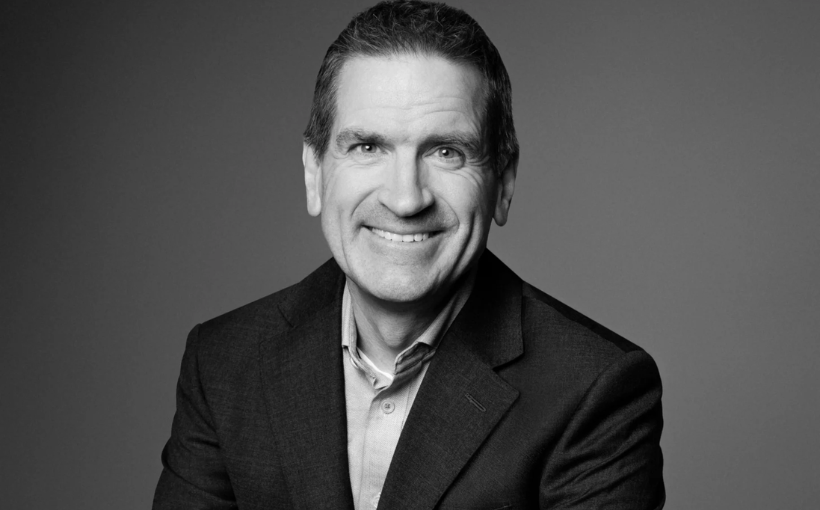
According to AlTi Tiedemann Global CTO Phil Dundas, artificial intelligence will play a critical role in helping wealth managers navigate that transition — not by replacing advisors, but by enhancing operational efficiency, personalization and decision-making. Dundas recently led the rollout of AlTi Tiedemann Global’s new AI platform, Nevis, and discusses how AI is reshaping client service, advisor workflows and the competitive landscape for wealth firms.
CM: From your vantage point, how urgent is the AI agenda for wealth managers?
PD: The urgency is real, but the pace of adoption and how effective AI becomes varies considerably. While almost everyone appears to be doing something with AI, the majority are only scratching the surface at the moment. A key part of any AI agenda is that urgency has to be purposeful.
For the firms servicing the mass affluent segment, wealth managers are building their own AI capabilities and other wealth segments are increasingly shifting toward autonomous, AI-driven decisions and self-service. For ultra-high net worth (UNHW) clients, though, the expectation isn’t that AI replaces their advisor – it’s that their wealth manager is leveraging AI solutions as sophisticated as the portfolios of the clients they serve. I’d say firms have a 6-to-12-month window to credibly articulate their initial AI strategies to boards, clients, and talent.
As well as getting started they must also understand that these plans will need to be updated and will evolve more quickly than what has previously been typical. Those that stay silent risk looking obsolete, but those rushing in without substance risk being called out just as quickly.
CM: When you talk to advisors, what are they most worried about: being replaced by AI, or being left behind by it?
PD: Frankly, most advisors are so busy servicing their clients and bringing on new clients that they have not begun to worry about the impact – positive / negative – on their firm. At AlTi, our advisors, together with their colleagues who help to provide services and advice, know the inherent value they bring to UHNW clients, so replacement anxiety isn’t really the conversation. What they do want is confidence that their firm has a credible AI strategy and is communicating it – both for their own effectiveness and to demonstrate to clients and prospects that we’re investing in being sharper and more efficient.
A real ‘aha moment’ came when we demonstrated an AI applications platform purpose-built to our wealth management model. Advisors saw the potential for it to synthesize context across CRM, portfolio reporting, collaboration tools, and email into rich, actionable output – giving them time back to do what they do best: engage and bring value to clients.
CM: What are the specific parts of the advisor–client relationship that you believe AI should never replace?
PD: The elements that matter most are our abilities to understand our clients and their extensive needs related to their wealth. What follows is how we take that knowledge to coordinate internally – and externally with other trusted advisors of the client – to deliver the services and advice that will help clients. This entails a heavy EQ capability coupled with context setting that AI should not replace. Examples of this include customizing portfolios to a broader set of inputs, developing personalized purpose of wealth plans, as well as assisting with the navigation of generational wealth transfers, addressing family dynamics, and executing a philanthropic plan specific to them.
Factoring in the emotions attached to what wealth means to each client requires humans who truly understand the complexity of relationships. There’s an expression I like: trust arrives on a bicycle but leaves in a sports car. These partnerships take years of trust to build, and at AlTi, we have a client of the firm approach, meaning you can access collective expertise and relationships beyond your individual advisor – that collaborative culture is something AI simply cannot replicate. AI should support decision-making, but the decisions themselves must always be made by a person.
CM: Where do you see the biggest opportunity for AI to take over “burden work” so advisors can spend more time in front of clients?
PD: A disproportionate amount of time across the advisor relationship – not just advisors themselves, but the teams who support them – is lost on administrative tasks: meeting preparation, follow-ups, reporting, documentation, onboarding, and task management. The biggest near-term opportunity is AI streamlining the entire workflow leading up to and following client engagement, so that every touchpoint is richer and better informed.
Importantly, AI isn’t about replacing advisors – it’s about empowering every person in the client relationship to operate at the top of their expertise and engage more fully with clients by doing more and doing it all better. When you free people from process, you unlock capacity for more time to be spent on a broader set of things that matter most to UHNW clients.
CM: Next-gen clients often expect hyper-personalized, always-on service. How can AI practically help advisors meet those expectations without burning out teams?
PD: Next-gen clients may not always ask for it explicitly, but they expect it – they have instant access to everything from their phones, so why wouldn’t they assume their wealth manager can deliver the same? AI helps us meet that expectation by surfacing information more efficiently and streamlining internal processes so we can operate more efficiently and personalize to them. What AI cannot replace is the judgment and intuition that only a person can provide. The goal is to create greater efficiency without sacrificing the high-touch, bespoke service our clients expect; AI supports the process, our people protect the trust.
CM: How are you training and supporting advisors—especially veteran practitioners—to build trust in the tools without feeling like they’re losing control of their practice?
PD: It starts with involvement – we’ve established an AI Council of seasoned wealth leaders and run hands-on pilots where advisors and their support teams are part of the process from day one. I’ve always believed adoption works best when technology teams design and deliver solutions with stakeholders, not to them – this is a partnership with our business, not a technology-led mandate. Whether an advisor uses AI a little or a lot will ultimately be their choice, and we’ve already seen with tools across our firm that broader adoption follows naturally when early adopters demonstrate the value and the time AI gives them back to operate more efficiently. There’s a strong appetite for AI across our firm and many bring external expertise; we want to capitalize on and channel that energy.
CM: What has surprised you most about advisor adoption or client reaction to AI tools so far?
PD: Honestly, how quickly our people adopted AI tooling without a push from my team – staff are already using AI at home, so transitioning to the workplace has been a natural extension of how they already leverage technology. What’s impressed me most is both the breadth of adoption and the sophistication; we’re seeing extremely high usage rates and, in many cases, remarkably thoughtful prompting and application.
On the client side, we’re increasingly fielding questions from both clients and prospects about our AI strategy and, just as importantly, how we’re governing its use securely and with appropriate privacy and discretion. We’re ultimately a trust-based business, and that must always be at the forefront. The truth is, there’s a difference between knowing how to use AI and getting the most from it, and that’s where we’ve focused – raising AI fluency across the firm so we’re all learning and improving together.