



The Future of Institutional Finance Is One Platform
As institutional adoption of digital assets matures, asset managers, fund administrators, and institutional investors face an operational challenge: managing fragmented workflows across traditional financial networks and digital asset venues. To operate efficiently, institutional market participants increasingly require unified infrastructure that combines banking, custody, liquidity management, and execution within a single, compliant operational model.
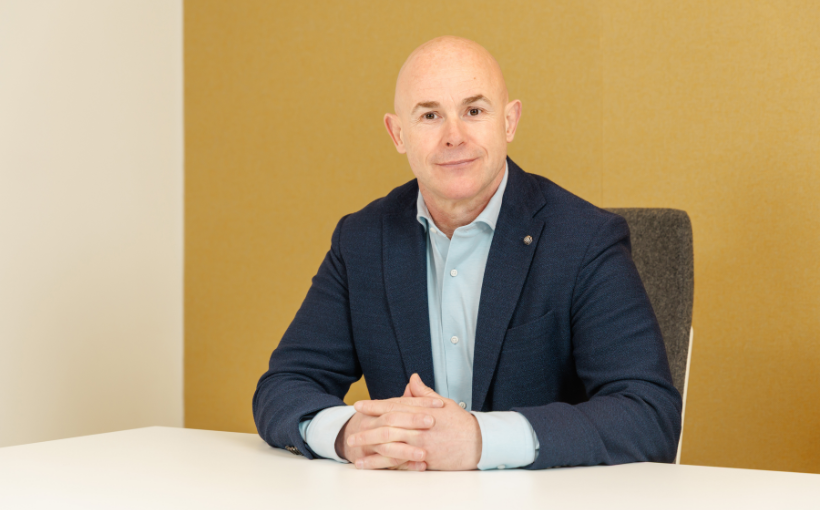
Built on FundBank’s established banking foundation, multi-jurisdiction platform IRACE is designed to solve this friction. IRACE’s chief executive officer John Cronin is building the banking infrastructure he says the industry has been missing: a platform that treats digital and traditional assets as two sides of the same balance sheet, not two separate worlds requiring two separate relationships.
CM: Institutional interest in digital assets continues to grow. How has the conversation changed over the past few years?
JC: The conversation has evolved from whether institutions will participate in digital assets to how they can do so within a regulated, institutional framework. Today, the focus is on governance, operational resilience and infrastructure that allows traditional and digital assets to operate within a single banking and control environment, rather than as separate systems.
CM: What are the biggest operational challenges institutions face when managing both traditional and digital assets?
JC: The greatest challenge isn’t managing the assets—it’s managing fragmented infrastructure. Many institutions still rely on separate providers for banking, custody, settlement, payments and digital asset services, creating multiple operational workflows, inconsistent reporting and additional counterparty risk. The opportunity now is to bring those capabilities together within a single regulated operating model that delivers greater visibility, stronger governance and more efficient operations.
CM: Why do you believe integrated banking infrastructure has become increasingly important for institutional investors?
JC: Institutions increasingly expect their infrastructure to work as one connected ecosystem. Rather than stitching together multiple providers across banking, custody, payments and digital assets, they’re looking for a single regulated relationship that simplifies operations, strengthens governance and supports growth across both traditional and digital markets. As institutional adoption accelerates, integrated infrastructure is becoming a competitive advantage rather than simply an operational preference.
CM: What problems are created when institutions rely on separate providers for bank
JC: Every additional provider introduces another layer of operational complexity. Institutions must reconcile multiple systems, reporting standards and control frameworks while managing additional counterparties and onboarding processes. That fragmentation slows execution, increases operational risk and creates unnecessary cost. Bringing these capabilities together within one regulated environment provides greater efficiency, transparency and control.
CM: Beyond security, what capabilities are sophisticated institutions demanding from custody providers today?
JC: Security is now the baseline expectation. Institutions increasingly expect custody providers to support the broader operating model through integrated banking, payments, treasury, governance, policy-driven controls, reporting and regulatory compliance. They’re looking for infrastructure that enables them to manage both traditional and digital assets through a single operational framework rather than a collection of disconnected services.
CM: Which regulatory developments do you believe will have the greatest impact on institutional digital asset adoption over the next several years?
JC: Continued regulatory clarity will be one of the biggest drivers of institutional adoption. In the U.S., developments such as the CLARITY Act represent an important step toward providing greater certainty around market structure, while Europe’s MiCA framework continues to establish a consistent regulatory foundation. As major financial centres continue to align their approaches, institutions will be increasingly confident integrating digital assets into mainstream investment strategies rather than treating them as a separate market.
CM: Looking three to five years ahead, how do you envision traditional banking and digital asset services converging?
JC: The distinction between traditional and digital assets will continue to diminish. Institutions won’t think in terms of separate operating models—they’ll expect banking, custody, payments, settlement and digital assets to operate within one regulated infrastructure, supported by consistent governance and reporting. The future isn’t about building parallel financial systems; it’s about creating one institutional platform capable of supporting the full spectrum of modern assets.