


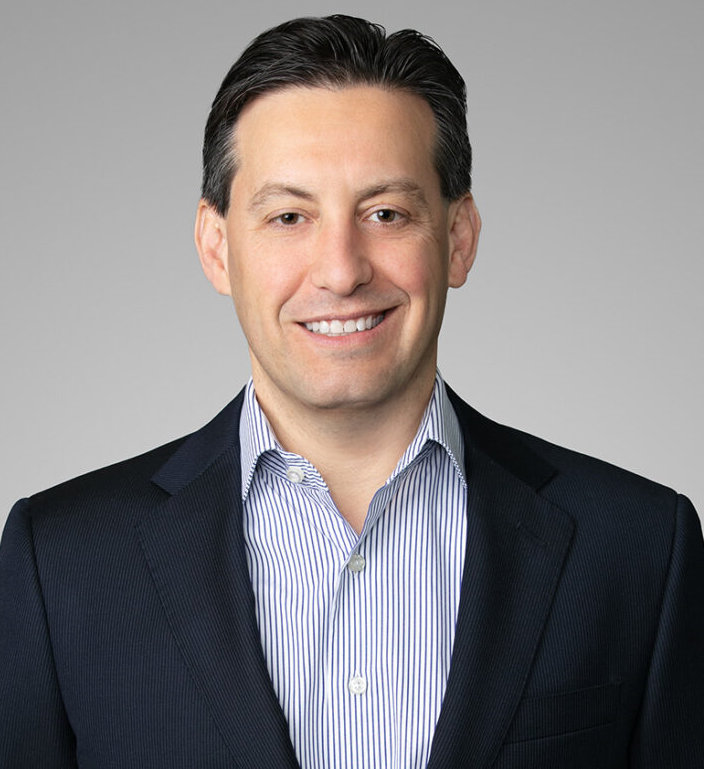

The “Anti-Private Equity” Approach: Q&A with Leon Capital’s Fernando De Leon
Fernando De Leon is the founder and CEO of Leon Capital Group, a company that began as a privately owned real estate development company in Texas and has since transformed into a $10 billion family holding company with businesses in real estate, financial services, healthcare, and technology.
The company’s portfolio includes salon services, mental health networks, multifamily residences, and industrial warehouses. Leon invests its own money with business owners, serving as partners to increase the value of their shared equity.
Leon discussed his company’s approach to private investing, which he calls “anti-private equity” because it rejects the shorter-term approach that is typical of the investment management industry today. Rather than following the usual private equity strategy of buying a company to sell it, Leon takes a contrarian approach to investing in founder-led businesses, calling it “buy-and-build.”
Additionally, the company is broadening its investor base. Leon primarily relied on its balance sheet and permitted only co-investment from other single-family offices. Wealth managers and high-net-worth individuals will now have access to its offering on iCapital.
CM: Tell us about Leon Capital Group and how you got started.
FDL: When I launched my business at the young age of 27, I had very (very) little capital. Competing with incumbents in the capital-intensive field of real estate development, I had to focus on adding value quickly and creatively through capital-efficient structures. I cultivated relationships with government leaders to streamline re-zonings, secured option contracts to control the purchase and sale of the land being re-zoned, and once the land entitlement was accomplished, I sold the option contract rights to large national homebuilders and captured the arbitrage value.
I was on the same “field” as the bigger players, but I was playing a more efficient “game.” I learned that complex, often-bloated organizations could not (or would not) accomplish what a nimble entrepreneur could. We’ve always built businesses laser-focused on the “unglamorous” (yet stunningly efficient) steps of value creation that incumbents see as an afterthought.
Today, our 13 operating subsidiaries across healthcare, housing, logistics, and financial services employ approximately 6,000 employees and provide essential services to over six million Americans.
CM: What are the advantages of being a direct owner and operator of assets?
FDL: We obsess over speed and cycle times. When we are directly connected to the joy and pain of good and bad decisions, we get feedback faster, iterate on solutions faster, and compound capital faster. We speedily isolate the true determinants of success and how to maximize those points of leverage. We have real time clarity into who creates value and who destroys it.
Direct ownership is necessary, but not necessarily sufficient to enable this process; we are also fanatical about eliminating bureaucracy. When I can be involved, I am; when I cannot be involved, one of my business leaders is; and when they cannot, an LCG employee is. It takes people who share our institutional DNA with a direct chain of accountability.
This accountability means that when we’re right, we can be more generous in distributing the value created to those who helped us create it.
CM: Explain your firm’s ‘buy-and-build’ strategy and how it has held up in this volatile market.
FDL: At its most reductive: (a) “buy-only” is the fastest way to deploy large amounts of capital, but because there is less value to add to an existing asset, there is less value to capture; (b) “build-only” can generate a high IRR on a small capital base, but is harder to scale and replicate to a capital base our size; (c) “buy-and-build” balances the capital deployment ability of “buying” with the IRR maximization of “building.”
The choice to buy, build, or buy-and-build is irrelevant if the asset is mismanaged; creating, refining, and re-refining operating models is where we spend much of our time. We are not going to pretend that we invented growing revenues while controlling expenses, but it’s one thing to put it in a PowerPoint deck and another to host vendor by vendor reviews month after month and year after year. It’s a question of discipline and stamina.
We know we have built a “Leon” company when every expense is necessary, not one that “reasonable operators expect to see.” Ignoring the expectations of others is the “superpower” of a family-controlled holding company, when they choose to deploy it.
As private market business builders, we don’t concern ourselves much with market volatility. If we have built a great business, we will patiently wait for the confluence of the right investors’ interest (public or private) at the right time. If one or the other is not there, we’re happy continuing to improve the company.
CM: In today’s economic environment, which industries and markets show opportunity? Any emerging industries of interest we should be keeping an eye on?
• Healthcare, specifically Outpatient Mental Health and Medspa: both share massive consumer tailwinds and non-physician centered staffing models.
• Lower Middle Market Credit: given our builder background, there is a natural adjacency and a highly scalable opportunity here. While we spent the better part of a year evaluating banks to acquire, the current regulatory landscape dramatically favors deployment through a credit fund versus ownership of a bank.
• Specialized Financial Services: through our dental implant business we realized how badly healthcare providers and their patients are served by traditional point of sale lenders, so we launched our own lending platform. We see similar opportunities in insurance and other financial services tailored to meet the needs of specific industries.
• Rental Housing: Given the varying building codes across every jurisdiction in the U.S., the manufacturing of housing at scale will continue to be very well rewarded by the capital markets. With housing availability across Dallas, Austin, Phoenix, and similar markets at 10-year lows and exacerbated by intra- and inter-country migration patterns, we believe this supply-demand mismatch to be both generational and structural.
• Logistics Enablers: at its most basic, the American economy is powered significantly by the American consumer who buys goods that end up in American houses. While the physical supply chain of goods has changed (from delivery via Sears Roebuck catalogs, to department stores, back to delivery via Amazon), the goods still require waypoints between the site of manufacturing and the site of consumption. A growing population consuming more per capita requires more logistical enablers including warehouses, cold storage, etc.
CM: How do you see AI/ML evolving and what impact will this have on the financial services industry?
FDL: We are bullish about the potential for AI to transform customer and employee experiences. However, we are taking a very measured approach to bring these capabilities to life. Industry regulation, customer privacy and data protection are key considerations along with technological maturity.
Specifically, at Leon, our thought is that AI will become the ‘player coach’ for decisions across all domains, amplifying human creativity and connections. For simpler tasks such as generating reports or approving invoices, AI will be the player that completes tasks autonomously with little human oversight. For more subjective or context dependent decisions, AI will be the coach, providing thoughtful guidance faster than any human can.
CM: Given your outlook and forecast, what is the next advice for longer-term portfolio asset allocation?
FDL: In real estate, you will likely continue to see an allocation shift out of office and large format retail into rental housing and logistics. Niche plays in cold storage, while data centers and digital infrastructure will continue to garner attention. Outperformance for asset allocators will hinge on cost basis in the right asset classes with a keen eye on fundamentals.
Outside of real estate, we like RIAs and investment managers structured in full alignment with the clients and limited partners. We will continue to acquire and scale insurance companies, acquire insurance assets, and finance insurance premiums.