


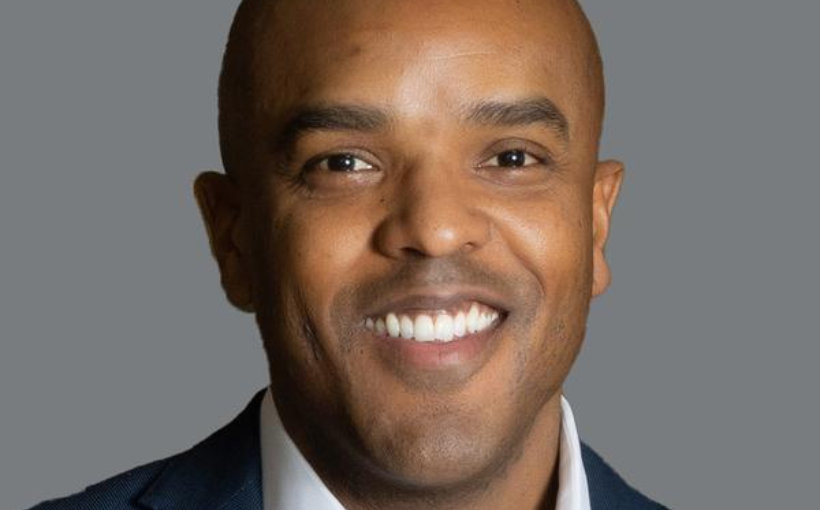

Supporting Business Owners with Exit Planning: Q&A with Edward Jones’ Jesse Abercrombie
Succession planning is all about preparing for the future—ensuring that when key leaders or employees move on, the right people are ready to step up. Whether you’re planning for leadership transitions in a business, government, or even a family, a strong succession plan keeps things running smoothly.
With National Small Business Week (May 4–10, 2025) and Small Business Month underway, what better time to ask a financial professional on how owners should navigate an exit from their business.
Jesse Abercrombie, a Certified Exit Planning Advisor® (CEPA®) and financial advisor at Edward Jones in Plano, Texas, shares insights on serving high-net-worth (HNW) business-owner clients. With over 20 years of experience and a top 50 ranking among Edward Jones’ more than 20,000 advisors, Abercrombie specializes in succession planning and navigating economic uncertainties, such as recent tariff announcements. Drawing from a 2024 Edward Jones study, he offers strategies for business owners to thrive.
CM: As a financial advisor focused on exit planning, how do you approach succession planning for your HNW business owner clients?
JA: Succession planning can be an emotional and challenging process for high-net worth business owners. Owners invest years, or even decades, of their lives and often their own money into growing their businesses, which can make it difficult for them to hand over the reins or even think about a succession plan. This is where my role comes in. Edward Jones serves clients and businesses of all sizes. I approach the succession planning process holistically to help clients navigate these difficult and emotional decisions.
Chiefly, I start by assessing their businesses and aligning with them on short-term and long-term goals. After establishing a timeframe for the transition, I then work with them and their team of professionals on building and executing a plan. Even for those HNW business owners who already have a plan in place, unexpected burdens (i.e., emotional and legal) often arise. As a Certified Exit Planning Advisor (CEPA®) professional, I’ve expanded my knowledge to be better equipped to work with clients to iron out these complexities or challenges.
CM: What are the biggest challenges business owners face when planning their exit?
JA: The biggest hurdle I’ve seen is as simple as not knowing where to start. Many business owners prolong or procrastinate the process which puts them in a tricky spot. The earlier you start the conversation, the better. In our recent survey on business succession planning, about half of the owners we surveyed also identified ensuring continuity (41%) and addressing financial aspects (38%) as some of the largest challenges they face. While this may look different for HNW individuals (who may not be as worried about finances) or vary by the size of the business, making sure their business is left in good hands is a consistent challenge we’ve seen across the board.
One of the areas I provide value in is connecting business owners with other professionals such as a CPA, estate planning attorney and/or M&A attorney. I refer to this as the core team of essential advisors. We then work on bringing in the functional team, who are specialized experts including valuation experts, ESOP specialists, private equity or investment bankers, key person insurance providers and more that are brought in as needed for specific issues. Once these teams are determined, this helps me to ensure that business owners are on the path to success.
CM: How are recent tariff announcements and economic uncertainty affecting your business owner clients’ planning, and what advice are you offering?
JA: As financial advisors, we understand the very real threats that tariffs and economic uncertainty pose to business owners and the pressures it places on succession planning. Such pressures include delays in timing and execution, as business owners may hesitate to transition leadership during periods of uncertainty.
Business owners cannot control the macroeconomic environment, but they must assess their operations and take the necessary steps to strengthen their business’s resilience. Times like these heighten the emotional and technical challenges of succession planning. One of the most striking findings from our survey was that only 37% of business owners use a financial advisor as a resource. Leaning on your financial advisor or a Certified Exit Planning Advisor (CEPA®) professional for guidance during this time is crucial to helping ensure you have an effective plan in place.
CM: The Edward Jones study highlights that 75% of business owners prefer passing their business to partners over family. Why is this trend emerging, and how do you support these transitions?
JA: We are seeing a trend in more owners deciding to pass their business to partners instead of their family members given the complex and delicate emotional challenges that come with involving your family in the succession planning process. Our survey found that new strategic directions (91%) were more common topics in succession conversations than preserving family legacy (81%). In some cases, family members might not have the interest or vision that aligns with the long-term goals of a business. This is where I often advise business owners to view succession planning as more than just passing the torch.
Great business owners really care about their employees. Several of them decide not to sell to a third party like a strategic or financial buyer (private equity) simply because they want to make sure their employees will be okay after they’ve transitioned out of the business. When they transition to a family member or decide to establish an ESOP (both internal transfers) they feel more secure about their employees’ future.
CM: What role does emotional preparation play in succession planning, and how do you support clients through this aspect?
JA: What we do best at Edward Jones is understand what matters most to our clients to help them plan and achieve their goals. The role that emotional preparation plays in the succession planning process cannot be understated. Whether it is letting go of a business that is deeply personal or finding the right successor, I work with clients on customized financial and investment plans based on their unique needs, wants and wishes.
As entrepreneurs ourselves, Edward Jones is proud to serve about 750,000 business owner clients, and our financial advisors (me included) work tirelessly to help ensure there are no surprises when the time comes to step away. For our HNW clients specifically, the launch of our Edward Jones Generations™ private client services offering later this year will only further support these clients with navigating emotional challenges specifically.
When phasing out of the business, I suggest business owners focus on three very important areas (or ‘the three legs of the stool’): business, financial and personal. Personal is very important and often overlooked when it comes to succession/exit planning. I have meetings with my clients called “What’s next” meetings, and my goal here is to really uncover what’s most important to them. We discuss three of the four pillars of retirement (health, family, purpose) and even provide access to business coaches who have a therapist background that can help them navigate the emotional aspects of selling the company. This a a huge value-added resource to help navigate the personal aspects of succession planning.
CM: What are the top priorities you recommend for business owners to focus on to strengthen their financial strategies?
JA: To protect and grow your business, start the conversation early on your business exit strategy and keep an eye on changing labor market trends. Assess your performance and business potential in the short- and long-term. Small Business Month is a great reminder for owners to review and evaluate their operations model.
Some business owners need help strengthening their financial strategy in the company. I’ll often introduce them to a value growth advisor who can help them focus on value drivers that help increase the company’s value as well as increase the range of their EBIDTA multiples. These advisors help with intangible values such as human capital, structural capital, customer capital and social capital. These intangibles along with tangible value can help make the company much more attractive to both strategic and financial buyers.