



Small Changes That Can Build Lasting RIA Value
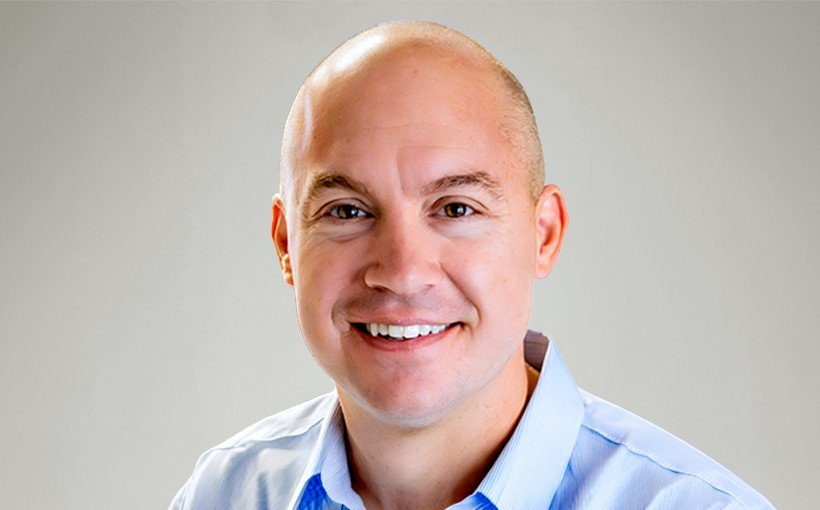
As advisors face mounting pressure to grow assets, retain clients, and plan for the future, many are discovering that meaningful value creation doesn’t require reinventing their business. Frank Smith, CEO of Private Advisor Group, has spent years helping advisors identify practical, often overlooked steps that can strengthen a firm’s operations, protect against disruption, and position it for long-term growth.
Smith discusses why succession planning deserves an annual checkup, how firm-wide education initiatives are cutting costs and sharpening efficiency, and how tools like Private Advisor Group’s Greenview Intelligence Report are giving advisors a clearer roadmap for building transferable, lasting value.
CM: When advisors think about increasing enterprise value, what operational improvements tend to deliver the greatest return with the least disruption?
FS: When advisors think about increasing enterprise value, they often assume it requires a major change. More often, it’s the accumulation of thoughtful improvements over time.
Some of those improvements are straightforward: maintaining expense discipline, getting more value from the technology you’ve already invested in, and eliminating complexity that isn’t serving the business.
But the greatest impact often comes from building a business that is less dependent on any one person. That means making sure client relationships are shared across the team, workflows are documented and repeatable, and continuity plans are in place so the business can continue to thrive regardless of who is in the office on a given day. Those changes often deliver the greatest return because they reduce risk and key-person dependencies. The more the business can operate, serve clients, and grow beyond any one individual, the more valuable it becomes.
CM: What characteristics distinguish a valuable, transferable advisory business from one that depends too heavily on its founder?
FS: The most transferable businesses often share a common characteristic: they’re remarkably easy to run. When too much rests with the founder or too few people, transferability is challenging.
This is something we’ve had to navigate ourselves at Private Advisor Group, and even recently we’ve made strategic hires and organizational changes to ensure responsibilities are distributed across the business.
If this sounds familiar, the question to ask is: “If you (or a key person) stepped away tomorrow, what happens to the business?”
A practical exercise can help answer that question. Write down your essential daily tasks and what would need to happen if you couldn’t come back to work tomorrow. If you don’t have clear ownership and coverage, your business may depend too heavily on you, and it’s time to take steps to make it more transferable.
CM: Why should succession and business-continuity plans be reviewed annually, even when an advisor’s retirement remains years away?
FS: Protect what you’ve built, and revisit and refine the plan at least once a year.
Plans that sit untouched for years stop reflecting the business you have, because they don’t take into account all of the evolution and growth the business has experienced during those years. And the industry data backs up the urgency: 105,887 advisors plan to retire over the next decade and more than a quarter of them are uncertain about their succession plans (per Cerulli Associates), largely because they’re not confident that their practice will be valued properly. Invest in your future and protect your life’s work early and often, especially in good times, not just under duress.
CM: What changes in ownership, staffing, technology, or client demographics should trigger an immediate review of a succession plan?
FS: The short answer is all of them.
A succession plan shouldn’t be something you create once and put on a shelf. It should evolve alongside the business. Any meaningful change in ownership, key personnel, technology, operations, or the makeup of your client base is a good reason to revisit the plan and make sure it still reflects reality.
Staffing changes are often the most obvious trigger. If someone joins, leaves, retires, or takes on a new role, it’s worth reassessing who would step in and what responsibilities would need to be covered in the event of an unexpected absence.
An often-overlooked trigger is success. A junior advisor may take on a much larger role, a handful of clients may come to represent a greater share of revenue, or rapid growth may change how responsibilities are distributed across the business. Those are positive developments, but they may also change the dynamics your succession plan was built around.
When the business changes meaningfully, it’s worth revisiting the plan to ensure it still reflects reality.
CM: What does Private Advisor Group’s Greenview Intelligence Report measure, and how does it compare firms with relevant peers?
SF: Greenview gives an advisor a personalized read on where their practice stands today. It looks at the factors that drive growth, sustainability, transferability, and long-term value. It’s not a single score: it’s a real diagnostic exercise looking at strengths, opportunities, and where focused attention could make a difference.
Greenview also goes beyond a traditional valuation. We pair an advisor’s own inputs with our proprietary data and benchmark it against their relevant peers. That gives us a clear picture of the business’s overall health and durability, plus a valuation range. From there, it becomes the foundation for a bigger conversation.
Once complete, the advisor’s Engagement Leader helps interpret the findings and develop a plan around the results. Supported by benchmarking, data, and experienced guidance, advisors can better prioritize opportunities and make more informed decisions for the health of their practice.
CM: If an advisor could take only three steps over the next 12 months to increase firm value, what should they prioritize?
SF: These three steps are topics we continually discuss with advisors. And high-value firms tend to prioritize them on an ongoing basis.
Know where you stand. Obtain an honest practice valuation. For us, that means running a Greenview Intelligence Report, but there are a variety of tools that can help advisors obtain a valuation. This addresses the confidence barrier I referenced because it gives advisors an understanding of what their business is worth today, and factors influencing its value.
Get it out of your head. Document your workflows, your value proposition to clients, how clients are serviced, and offer training and ensure you have procedures for critical operating tasks. The goal is to lay the groundwork for a practice that doesn’t start and end with one person.
Tighten the operation. Review expenses, evaluate whether you’re getting full value from your technology, and eliminate complexity that isn’t serving the business. Many firms find they are paying for tools, subscriptions, and services they no longer fully utilize. Taking a fresh look at your vendors, processes, and operating costs can often reveal opportunities to run a more efficient and profitable business.
At Private Advisor Group, we don’t just help advisors think through valuation, succession, and continuity planning, we’ve had to do the same work ourselves. Over the years, we’ve navigated growth, organizational change, founder succession, and leadership transitions while continuing to evolve the business for the future.
That’s why we believe so strongly in this process. It’s not theoretical. We’ve lived it firsthand, and helping advisors build enduring businesses and prepare for what’s next is one of the most rewarding parts of what we do.