



Navigating the Heartland Boom: Mercury Fund’s Blair Garrou on Vertical AI and Non-Coastal Tech Exits
Artificial intelligence is reshaping venture capital, but some of the biggest opportunities may not be emerging from Silicon Valley. Mercury Fund, a Houston-based venture capital firm with approximately $750 million in assets under management, has spent two decades investing in software companies across underserved technology markets such as Indianapolis, Tulsa and Salt Lake City.
Following the oversubscribed close of its $160 million Fund V, Mercury has deployed capital into roughly 20 new companies over the past 18 months, with a growing emphasis on vertical AI, blockchain infrastructure and frontier technologies.
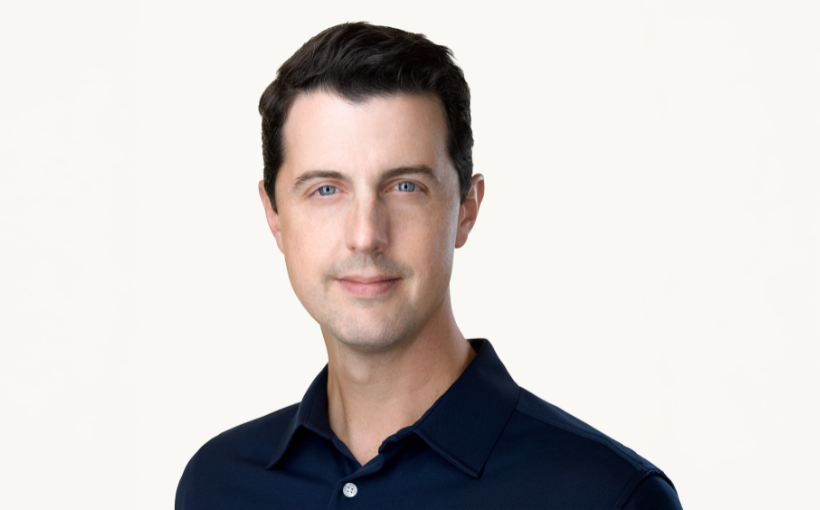
Blair Garrou, co-founder and managing partner of Mercury Fund, discusses why experienced industry operators are becoming the next generation of AI founders, how the AI infrastructure boom is transforming regional innovation ecosystems, and what investors should expect from the evolving venture capital and exit environment.
CM: Many of your recent portfolio companies are founded by industry veterans rather than first-time entrepreneurs. Why has deep domain expertise become such a competitive advantage in AI?
BG: Domain-expert founders who are regionally located, industry-trained, and building platforms tailor-made for specific markets will inherently know their customers better than someone with limited domain experience. These founders also come with built-in distribution networks. We saw this play out with vertical SaaS platforms that were built by founders who understood their industries from the inside rather than trying to serve every customer from a distance. We’re backing the founders who earned the right to win in their industries long before the models caught up to them.
CM: Why are vertical AI applications proving more compelling than horizontal AI platforms from an investment perspective?
BG: Proprietary workflow, data, and distribution advantages create an enduring moat. A founder embedded in an industry has access to data and relationships a general-purpose tool simply can’t get to, and that compounds over time. Horizontal platforms compete on features. Vertical ones compete on knowing something real about a market that’s hard to fake and even harder to catch up on. Vertical platforms also build trust when they interact with customers via zoom or in person, as their employees tend to have real experience and speak the industrial language of their customer.
CM: What originally convinced you that tertiary hubs like Indianapolis, Tulsa and Salt Lake City could support repeatable, venture-scale outcomes?
BG: During the early days of SaaS, we saw that founders could genuinely build from anywhere. Domain experts could hire technical and executive leadership teams around them to build venture-scale companies, even outside of the Bay Area. Eventually, centers of gravity started to appear in various cities and those cities have become regional tech hubs that have gone on to produce companies with real, durable value. Then COVID changed how and where people work for good.
AI is accelerating that same shift, and for a very practical reason: it’s making building product dramatically easier. A founder in Tulsa or Indianapolis doesn’t need to hire twenty engineers to get a product to market anymore. AI tools compress the design and build cycle that used to take years into months, and they let a lean, domain-expert team do work that once required a full Silicon Valley-style engineering org. That’s the real unlock. The talent and industry knowledge were always there in these markets. What was missing was the ability to build fast without a coastal-sized headcount and burn rate. AI just removed that barrier.
CM: You’ve mentioned founders in industries like energy, healthcare and HVAC launching AI companies with virtually no customer acquisition costs. How does that change the venture capital playbook?
BG: It changes unit economics for the better, which we love to see. Take a company like Collide in energy, Omniscience in healthcare, or SmartAC in HVAC. These are founding teams who spent careers inside these industries before starting their companies. They’re not cold calling their way into a market. Customers already know them, trust them, and in many cases are the same people they worked alongside for years. That collapses the sales cycle and marketing spend a typical venture-backed company would need to burn through just to get in the door.
Combine that with leaner headcount, since AI-native teams don’t need to scale the way software companies once did to hit the same revenue, and you get founders who can reach profitability, or at least real defensibility, on a fraction of the capital earlier funds required.
CM: How has venture fundraising changed compared with just three years ago?
BG: The market has bifurcated, and we see it as a barbell. On one end, mega fund platforms are raising billions per fund, building portfolios of hundreds of companies, chasing decacorn outcomes with a kingmaker model. On the other end, nimble early-stage funds like Mercury Fund ($250 million or less), are running concentrated, curated portfolios with an operator model and mindset. Both ends of that barbell can produce top-quartile outcomes, but the mega fund path is increasingly hard for founders, and for LPs, to access. Our end is not.
That bifurcation has left a gap in the middle, and it’s exactly where we’ve built our model: leading or co-leading Seed and Series A rounds, backing domain-expert founders early, and staying close enough to help build the company rather than just write the check.
CM: Venture-backed IPO activity has begun to recover. How would you characterize today’s exit environment?
BG: We’re thrilled that the IPO market has begun to recover, in fact, the first IPO of 2026, BitGo, was a Mercury Fund portfolio company.
In addition to the public markets reopening, we’re seeing M&A activity heating up. Corporate acquirers are back in the market for strategic assets, and sponsor-to-sponsor activity, secondaries, and tender offers have become real release valves in their own right rather than fallback options. Carta’s most recent data on the broader private markets pointed to something similar: with public listings still selective, the secondary market and tender offers have become the primary liquidity mechanism for most companies right now. That tells us the exit environment is genuinely widening, not just concentrating around a handful of marquee IPOs.
We have several portfolio companies actively in market right now, and we’re optimistic about where the market is heading.