



Inside Hospitality’s Capital Shift: Where Operators See Opportunity
As institutional capital continues to recalibrate across real assets, hospitality is re-emerging as a nuanced, operations-driven opportunity set. Unlike other asset classes, hotel performance is deeply tied to execution at the property level, placing third-party operators at the center of value creation.
Aimbridge Hospitality, the world’s largest third-party hotel operator, sits at the intersection of ownership and operations, working closely with private equity, REITs and institutional investors to optimize performance across diverse portfolios.
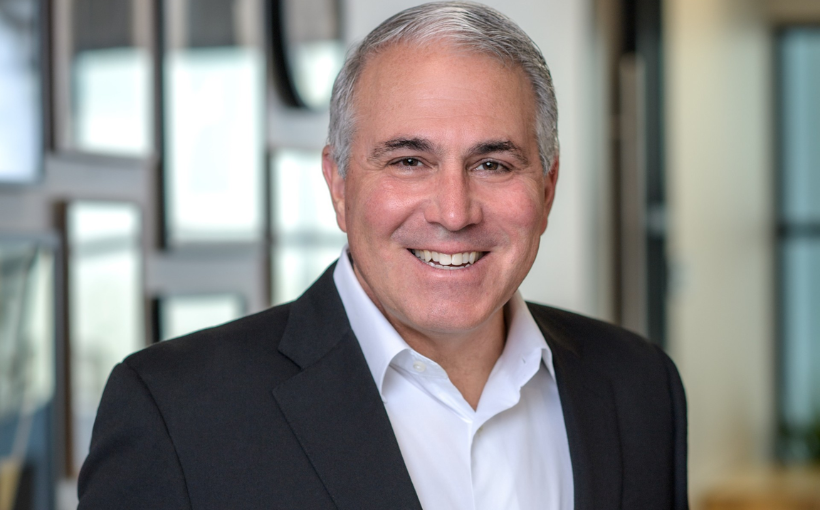
Eric Jacobs, chief global growth officer at Aimbridge offers a real-time lens into where capital is flowing, where it is hesitating, and how operational strategies are evolving to drive returns in a more complex macro environment.
CM: How does Aimbridge partner with institutional investors and funds across different ownership structures?
EJ: Aimbridge works with a broad range of owners – REITs, private equity funds, high net worth individuals and family offices. Private equity typically operates on a five-to-seven-year horizon, which means driving top-line performance and RevPAR index is front and center for them. That’s where our national and global sales infrastructure becomes a real differentiator. The sheer number of salespeople we have on the ground and our ability to drive group business across both full service and select service properties, especially for portfolios that aren’t concentrated in one market.
Reporting and data analytics are equally critical for institutional partners. They need information quickly and accurately, whether that’s for internal reporting or external disclosure obligations as a publicly traded REIT. And because we’re the largest cross-brand, cross-hotel-segment database in the industry, we can layer on macro and national economic context in a way that smaller operators simply can’t.
And increasingly, institutional partners are asking us what we’re doing with AI. They want to understand how we’re leveraging our data to drive productivity, improve forecasting, and find labor savings. That investment is very much underway across the enterprise.
CM: What are investors prioritizing today when selecting a third-party operator?
EJ: Owners and investors increasingly value operators that can create advantages across every stage of operations. Data, insights and productivity tools are certainly at the top of the list, but brand recognition and voice are increasingly gaining steam. Aimbridge operates more premium branded hotels than the brands do themselves. That scale gives us a seat at the table with senior brand executives, and it means we can advocate for our owners in ways that directly affect how brands develop their programs and systems.
Performance ratios matter enormously. Our ratio of revenue managers to properties, salespeople to properties, above-property leaders to properties is lower than most anyone operating at our scale. Institutional investors, especially PE funds with multiple asset managers scrutinizing every line item, want to know that someone is paying close attention to their asset at every level.
Owners and investors want operators who can lead with a track record of managing large, complex portfolios – not just a single hotel. We’re building a genuine performance and accountability culture that simply didn’t exist here before our current leadership team was in place: clear directives, strong GM development, and a mindset that every property leader should think and act like an owner.
CM: Which hospitality segments are attracting the most investor interest right now?
EJ: Leisure is where a significant amount of capital is focused including upscale and luxury leisure markets, resort destinations. We’re also seeing growing interest in the Caribbean and Latin America, including some movement toward all-inclusive from institutional partners.
Urban full service is worth watching closely, though for different reasons. These assets are probably the most stressed in the market today, but that stress creates opportunity. As they start to trade, they’ll represent some of the most compelling buys for investors who are patient.
On the Select-Service side, extended stay remains the most resilient asset class across cycles, and that’s where a lot of both private and institutional capital is going. The operating model is just fundamentally more efficient. If you have a 100-room hotel and a 10-night average length of stay, you only need about 3,600 room nights a year to fill it, compared to 36,500 at a nightly turnover pace. You’re not cleaning every room every day, you’re not checking 100 guests in and out daily. Brands like Residence Inn, Home2 Suites, and TownePlace Suites have proven this model over the years, and the capital markets have taken notice.
CM: Are investors leaning more toward new development, repositioning, or acquisitions at this point in the cycle?
EJ: It’s acquisitions and repositioning, full stop. New development is extremely difficult in today’s environment. Interest rates aren’t the only issue – it’s the compounding effect of labor costs, materials, tariffs, insurance and the sheer complexity of getting approvals through cities and communities. When you factor in a 4-5 year runway before you see a return on a new build, why not buy an existing asset that starts generating returns more immediately?
The institutional model is also structurally better suited for acquisitions. These institutions raise capital in funds with defined timelines, which makes construction development difficult to manage. Most of the new development activity you do see comes from entrepreneurial developers who build and then hope an institutional buyer is waiting at the end. That dynamic has always existed, but it’s especially pronounced right now.
CM: Where are the biggest operational alpha opportunities today?
EJ: Revenue management is an area where AI is going to be genuinely transformational. We’re already seeing pricing tools that recalibrate every 15 minutes, not once or twice a day. As these tools become more sophisticated, a company with Aimbridge’s data footprint – spanning brands and geographies at our scale – has a real structural advantage in driving that value for owners.
Additionally, food and beverage is genuinely back. Hotels walked away from F&B for a long time as boutique restaurants proliferated and guests went out to explore their neighborhoods. But particularly in lifestyle and leisure properties, a compelling F&B concept has become a meaningful revenue driver again. Consumers aren’t just asking whether a hotel has a restaurant – they’re looking for quality, experience and something unique. The shift is from, ‘Can we just break even on an all-day dining room’ to ‘How do we maximize that space as a revenue center?’
CM: How do you expect institutional capital to shift across hospitality over the next 12 to 24 months?
EJ: There’s a meaningful volume of hotel loans coming due between now and 2027, and the decisions lenders and owners make around those maturities will likely be the biggest driver of transaction activity in our segment. The core tension is this: many assets aren’t worth what they were built or acquired for. On average, I’d estimate a significant number are worth somewhere between 65 and 75 cents on the dollar relative to prior basis. That makes refinancing painful. That means an owner is coming out of pocket, and it makes selling difficult because owners aren’t willing to accept the loss.
As such, we’re starting to see more portfolios and individual hotels going back to lenders. Owners who can’t attract a buyer at their target price just aren’t willing to fund the brand-mandated renovation, and don’t want to plow more capital into an asset that isn’t performing. We operate portfolios of hotels that in some cases haven’t seen meaningful renovation in well over a decade. That’s not sustainable. The compounding pressure of lender requirements, brand PIP mandates and consumer expectations for product quality will force transactions.
All that said, institutional capital is sitting flush. Major funds have raised significant capital and are actively looking for places to deploy it at reasonable cap rates and valuations. When that dislocation finally materializes, the investors who have been patient, done smart underwriting and stayed close to the right markets will be very well positioned.
CM: Stepping back — why is hotel investment still a compelling long-term opportunity?
EJ: People have been looking for somewhere to sleep since the beginning of civilization. That’s not hyperbole – it’s a fundamental human need. And if the pandemic didn’t permanently impair our industry, nothing will. Travel for business, leisure, weddings, events and conferences and family milestones – none of that is going away.
In hospitality, as in all commercial real estate, basis matters enormously. What I’ve observed across 9/11, the 2008 financial crisis and the pandemic is that every time a major event hits, there’s an expectation of a fire sale and it rarely materializes at the magnitude people anticipate. The drop in interest rates post-2008 held values high, even elevating them. Now, post-pandemic values haven’t reset to the levels many hoped for.
For investors with patience and discipline, the playbook is tale as old as time: identify markets with durable long-term economic drivers – diverse employment bases, government and defense presence, strong leisure demand, high-tech sectors – and buy the right assets in those markets when the basis works.