


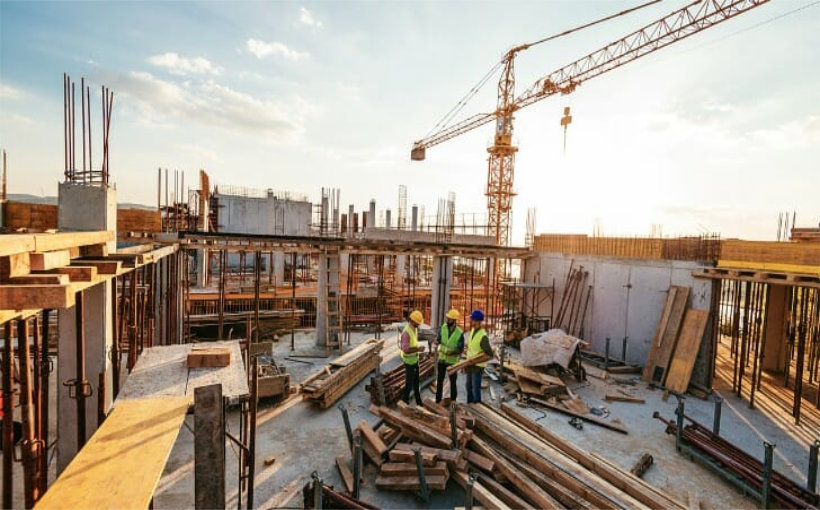

Infrastructure Investments Remain Hot
The demand for dollars to finance the development of durable and environmentally friendly infrastructure is currently higher than ever, and fund managers are taking various measures to address this requirement. Anticipated trends include ongoing investments in energy transition, decarbonization of transportation, and the circular economy, and a sustained emphasis on hybrid infrastructure assets.
Infrastructure fundraising faced extreme challenges in 2023. The fall was less pronounced and postponed in comparison to the decline observed in private equity buyouts. “Notwithstanding the headwinds to deal count and fundraising continuing into the first quarter of 2024, the near-term outlook appears more optimistic than what we saw a year earlier,” said Martin Weißbart, Prinicipal at management consultancy firm Roland Berger.
While the mammoth infrastructure fundraise in the fourth quarter of 2023 by Brookfield Asset Management ($28 billion) is difficult to match, evidence that demand for infrastructure investments is reigniting has been on display in recent months.
H.I.G. Capital, a Miami-based global alternative asset manager, just closed a $1.3 billion middle market infrastructure fund. The firm has already made seven investments through the vehicle. In April, KKR & Co reportedly raised $11 billion for its latest global infrastructure fund, double its target.
According to the Q1 2024 Infrastructure Quarterly report from CBRE Investment Management, this year is turning out to be an unusual one for infrastructure investors.
“The macro outlook in 2024 is more supportive of listed infrastructure due to slower global growth, above-trend inflation and interest rate stabilization, which have historically catalyzed listed infrastructure performance, according to Tania Tsoneva and Jake Parker Allen, the authors of the report.
“Structurally higher inflation generates revenue growth for a variety of infrastructure assets; robust policy support improves project economics; and moderating interest rates narrow the gap between buyer and seller expectations.”
CBRE anticipates that infrastructure debt and higher yielding strategies will continue to attract attention in fundraising vehicles due to the elevated interest rate environment. Additionally, the energy transition is expected to continue driving project finance, while the development of artificial intelligence is predicted to stimulate innovation in the evolving digital infrastructure sector.
The investment horizon for infrastructure is focused on the long-term, and the outlook will continue to be influenced by long-lasting trends. According to Graham Matthews, CEO Infrastructure at Patrizia, “Decarbonization and the energy transition will undoubtedly provide strong tailwinds to the infrastructure asset class given how much investment is needed each year to achieve decarbonization objectives.”
The rate of digitization is rising rapidly as well. “In this increasingly digital world, internet speeds, reliability and broadband coverage need to increase, and data storage needs to be ramped up, making significant investment in physical digital infrastructure critical,” added Matthews.
An Eye on Rates
UBS’s 2024 Outlook report predicts that interest rates’ influence on infrastructure investments, considering 5-year inflation projections, will have a limited effect. Given the high leverage of infrastructure assets, the investment performance can be significantly affected by changes in interest rates, especially if the asset has a robust mechanism for passing on cost increases.
“Forward inflation expectations implied by the swaps markets have been relatively stable despite the recent uptick,” noted UBS. Despite the market’s recent volatility, this suggests that the impact of long-term interest rates on infrastructure may be modest.
Turning Point
It seems that we are currently at a critical turning point regarding infrastructure assets. The outlook for funds that invest in assets that generate consistent income and experience increasing value over the next five years seems promising.
The UBS analysis provides additional details on the factors that will contribute to the long-term growth of infrastructure investment, including the transition to a low-carbon economy, the increasing use of digital technology, the shift towards more localized economies, and changes in population demographics.
“As we move beyond the inflation and interest rate shock in 2022-23, market expectations will reset, and we are cautiously optimistic that deal activity will pick up, especially since the long-term investment themes remain intact.”
“It is ultimately the long-term megatrends that will drive long-term investment returns. Infrastructure’s pivotal role in generating environmental and societal outcomes over periods measured in decades rather than years, offers cause for optimism,” added Matthews.