DJIA38904.04 307.06
S&P 5005204.34 57.13
NASDAQ16248.52 199.44
Russell 20002060.10 8.70
German DAX18163.94 -238.49
FTSE 1007911.16 -64.73
CAC 408061.31 -90.24
EuroStoxx 505013.35 -57.20
Nikkei 22538992.08 -781.06
Hang Seng16723.92 -1.18
Shanghai Comp3069.30 -5.66
KOSPI2714.21 -27.79
Bloomberg Comm IDX102.90 0.64
WTI Crude-fut91.17 0.01
Brent Crude-fut86.57 1.15
Natural Gas1.79 0.00
Gasoline-fut2.79 -0.01
Gold-fut2345.40 33.50
Silver-fut27.50 0.46
Platinum-fut940.60 -5.50
Palladium-fut1007.40 -23.60
Copper-fut423.60 1.85
Aluminum-spot1815.00 0.00
Coffee-fut212.50 5.75
Soybeans-fut1185.00 5.00
Wheat-fut567.25 11.00
Bitcoin67976.00 304.00
Ethereum USD3328.10 56.27
Litecoin98.71 0.69
Dogecoin0.18 0.00
EUR/USD1.0862 0.0007
USD/JPY151.72 -0.02
GBP/USD1.2678 0.0016
USD/CHF0.9044 -0.0014
USD IDX104.28 0.08
US 10-Yr TR4.4 0.091
GER 10-Yr TR2.406 0.007
UK 10-Yr TR4.064 -0.005
JAP 10-Yr TR0.771 -0.004
Fed Funds5.5 0
SOFR5.32 0
High-rise commercial buildings

Sub Markets

Topics

Latest News  + Economy  | 
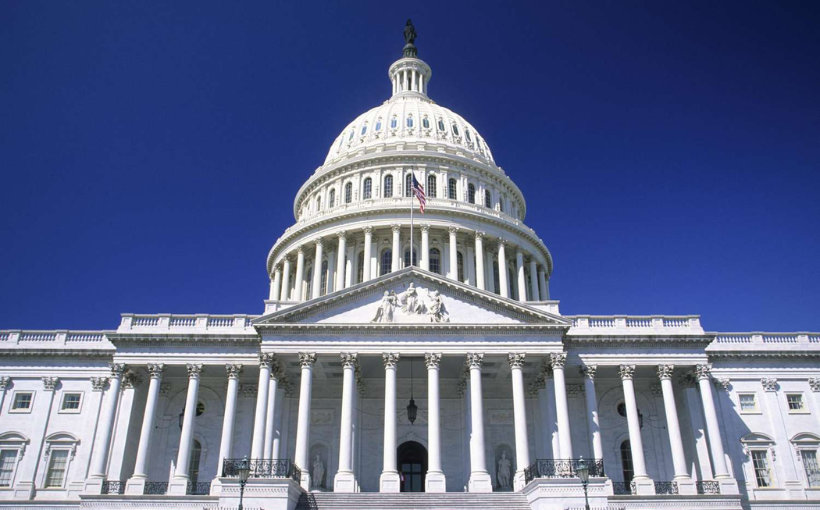
CBO Signals Potential Crunch Point If Congress Doesn’t Focus on Debt Ceiling

CBO Signals Potential Crunch Point If Congress Doesn’t Focus on Debt Ceiling

The government’s capacity to borrow through “extraordinary measures” is likely to run out by August or September, signaling a potential crunch point for federal debt management later this year, the Congressional Budget Office said on Wednesday.

However, the precise date could deviate considerably from the CBO’s estimated “X date”—the point when the government exhausts its funds—potentially occurring well before or after August or September. Variations in the timing and volume of revenue collections and expenditures over the coming months may not align with the CBO’s current forecasts.

“If the government’s borrowing needs are significantly greater than CBO projects, the Treasury’s resources could be exhausted in late May or sometime in June, before tax payments due in mid-June are received or before additional extraordinary measures become available on June 30,” the CBO said in its assessment.

“Conversely, if borrowing needs fall short of the amounts in CBO’s projections, the extraordinary measures will permit the Treasury to continue financing government activities longer than expected,” it added.

Should the debt limit remain unchanged or unsuspended once the extraordinary measures are depleted, the U.S. government would lack the funds to meet all its obligations. This scenario would force the federal government to either delay payments for certain activities, default on its debt commitments, or both, the CBO warned.

In 2023, Congress suspended the debt ceiling until January 1, 2025. On January 2, 2025, the limit was reestablished at $36.1 trillion, reflecting the total debt outstanding as of January 1. On that same day, a pre-scheduled redemption of securities in the Medicare trust fund reduced outstanding debt by $54 billion, providing the Treasury with a temporary buffer for additional borrowing. This adjustment pushed back the start of the “debt issuance suspension period” to January 21, 2025, when the Treasury began relying on extraordinary measures to manage cash flow.

Connect

Inside The Story

Congressional Budget Office

About Joe Palmisano

Joe Palmisano is Editorial Director for Connect Money, where he brings nearly three decades experience of market insights as a financial journalist, analyst and senior portfolio manager for leading financial publications, advisory firms, and hedge funds. In his role as Editorial Director, Joe is responsible for the selection of content and creation of daily business news covering the financial markets, including Alternative Assets, Direct Investment and Financial Advisory services. Before joining Connect Money, Joe was a financial journalist for the Wall Street Journal, regularly publishing feature stories and trend pieces on the foreign exchange, global fixed income and equity markets. Joe parlayed his experience as a financial journalist into roles as a Senior Research Analyst and Portfolio Manager, writing daily and weekly market analysis and managing a FX and US equity portfolio. Joe was also a contributing writer for industry magazines and publications, including SFO Magazine and the CMT Association. Joe earned a B.S.B.A. in Finance from The American University. He holds the Chartered Market Technician (CMT) designation and is a member of the CFA Institute.

New call-to-action
New call-to-action
New call-to-action