


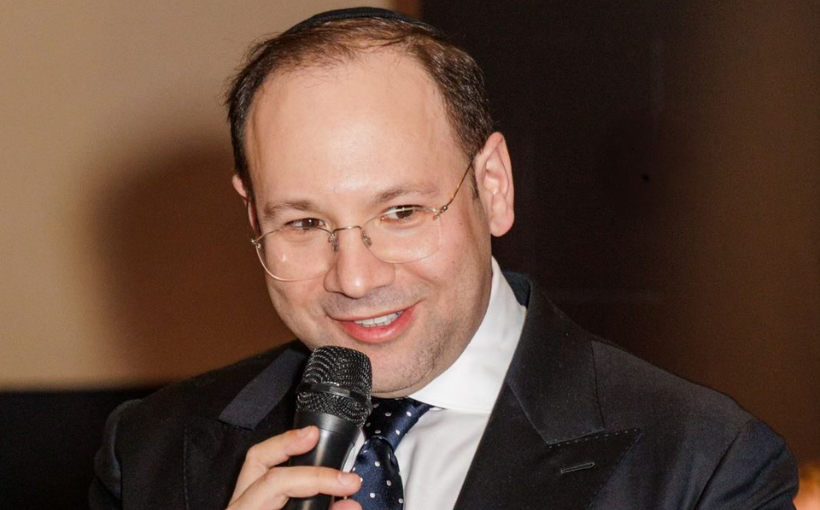

CASE’s Shlomo Chopp on the “New Graves” Emerging Across Commercial Real Estate
CASE Managing Partner Shlomo Chopp has emerged as one of the more outspoken voices challenging long-held assumptions around “safe” hard assets, arguing that technological disruption and rapidly changing tenant economics are accelerating obsolescence across sectors once viewed as durable.
In his recent piece, New Graves to Dance On, Chopp draws parallels to Sam Zell’s “grave dancer” investing philosophy, contending that today’s opportunities and risks stem less from cyclical downturns and more from collapsing business models hidden beneath seemingly stable properties.
Chopp offers a perspective on where cracks are emerging across office, retail, industrial and even data center real estate. He discusses how investors should rethink underwriting, why AI-driven demand may not be as durable as markets assume, and where the next distressed opportunities could emerge.
CM: Where do you think mainstream CRE investors are still most in denial about how much has structurally changed?
SC: Most mainstream CRE investors still think this downturn is like every other downturn. Just a financial or supply and demand dynamic. As Mark Twain said, history rhymes, but every cycle is unique. On the surface, this downturn was driven by interest rates, but beneath that there are fundamental, technology led shifts in how tenants operate. That distinction matters, because it means a reversal in rates alone won’t fix it. There are real, underlying issues with the properties themselves.
Retail has structurally changed, industrial has structurally changed, and now industrial is changing again because ecommerce hasn’t proven to be as profitable as the buildout assumed. Most investors don’t fully internalize that. They’re hearkening back to prior cycles. Interestingly, they do end up pricing some of this risk in without realizing it: through longer assumed turnaround times, higher repositioning costs, or simply by avoiding certain properties altogether. The reason those costs and timelines are higher is because the underlying properties are no longer relevant in their current form, and the market is quietly pricing the work needed to make them relevant again.
CM: You’re critical of traditional underwriting metrics like occupancy, WALT, and trailing NOI. What’s the most dangerous way those numbers lull owners and lenders into a false sense of security?
SC: I’d push back on the premise. I’m not critical of those metrics themselves. They’re useful, but only in the context of a property that is relevant and not on the path to obsolescence. That’s the baseline that must come first.
Once you have that baseline, you must look at the tenancy that’s there, the desirability of the property to future tenants, and what the next 5 to 10 years look like. Occupancy, WALT, and trailing NOI are, by definition, trailing. The real question is what happens going forward. You can see this most clearly in how people are underwriting data centers today: the technology behind the demand is changing quicker than the lease, and as a result there is a real risk that the need for the space, or the configuration of the space, will change as well. That risk simply is not being underwritten today. If your pro forma is built off yesterday’s tenant mix and yesterday’s space needs, you’re underwriting nostalgia.
Please understand that I keep on pointing back to data centers because unlike other asset classes, it is so in vogue yet provides the best illustration of how technology changes quickly, but data center investors seem unconcerned about its implications.
CM: Retail and office have already experienced major disruption. Why do you believe industrial and data centers could face similar risks?
SC: Industrial filled the role retail vacated. It became the physical backbone of ecommerce. The problem is that ecommerce itself isn’t proving profitable enough to support the industrial buildout, and a huge portion of demand is driven by a few behemoths like Amazon. With industrial, the softening has already begun. We’re watching it play out in front of our eyes, with rising vacancy and weakening demand. The asset class is still relevant; it’s just been overbuilt against a demand assumption that hasn’t held.
Data centers face a different but related risk, and I want to be careful about how this is framed. The issue isn’t that we’re financing data centers. The issue is that a data center is like a hotel in that it is purpose built for a very specific use and isn’t easily repurposed for something else. That means it should be underwritten more like a business than like a piece of generic real estate, even though payroll is low and direct human operations are a smaller factor than in a hotel. When you underwrite a business, you must underwrite for the business risk too: technology obsolescence, demand stability, and substitution. Investors are getting comfortable assuming today’s configuration is permanent instead of building in those protections, and if the reports about the leases the largest data center users are signing is accurate, you can see they’re hedging their own bets.
CM: Data centers are currently viewed as one of the hottest sectors in CRE. Where do you think investors may be underestimating the risks tied to AI infrastructure demand?
SC: I don’t think the demand itself is being underestimated. I think the competition and the substitution risk are. You’ve already got serious work being done on satellite based data infrastructure; once you see how fast a Starlink connection is today, it’s not obvious that latency stays a long-term moat for terrestrial facilities.
On top of that, chip architecture is evolving extremely quickly, and an enormous amount of R&D is going into making compute more efficient, denser, and less dependent on today’s power and cooling profiles. That means today’s “state of the art” data center can quietly become tomorrow’s awkward retrofit, even if AI demand keeps growing.
CM: What parallels do you see between today’s environment and the distressed opportunities that emerged during the Global Financial Crisis?
SC: The common thread is simple: there’s distress. But the cause is different. In the GFC, rates were high and ultimately came down, which helped resolve the distress. This time, rates were artificially low and went up, and a lot of assets that looked modestly leveraged on an LTV basis weren’t really. The appraisals were inflated because cap rates had been compressed by cheap debt.
I want to be precise here, though. It would be wrong to say this isn’t primarily a leverage issue. It is primarily a leverage issue at the surface, just like the GFC. What’s different is what sits underneath. Beneath the leverage problem this time is a real obsolescence problem, and that must be addressed. Absent that, there can’t be a true recovery, no matter what rates do.
CM: You make the case that long duration leases and low cap rates create an illusion of conservatism when tenant relevance can decay faster than the lease matures. Walk me through a real world scenario.
SC: We’re currently doing a loan restructure on an office building whose major tenant was the headquarters of a national retailer with stores across the country. Pre COVID, you would have bet anything that this tenant was a long-term occupant, if not in this building, then in another office somewhere. Then COVID hit, the retail footprint was wound down, the lease essentially went dark, and once the lease term finally ran out, they were gone. The “long duration lease” looked like protection, but the question that was never seriously asked was: will the tenant still have a use for this space when the lease comes up? Of course, not, and there was no reason to think that. Today, however, there’s absolutely a reason to think of that, but most do not.
Pre COVID, no one would have thought twice. The retail engine behind the headquarters was humming. Post COVID, with malls declining and ecommerce taking share, the entire reason that office existed eroded. It doesn’t take an exotic technology story to see this; it’s a very simple chain reaction. And it generalizes: think of your iPhone. The hardware is just a vessel for the data. When the hardware becomes obsolete, the vessel is worthless. A data center is the same: it’s a house for data, and when the house no longer fits the data, value declines fast.
I’d reframe one piece of your question, though. I wouldn’t say low cap rates create an illusion of conservatism. I’d say they create artificially high prices, and that is what creates the illusion of safety when a loan looks like a lower LTV. That was one of the main reasons many people gave after the GFC recovery to argue that we wouldn’t have the same problem again. They pointed to “lower LTVs” without acknowledging that the values underneath those LTVs were inflated by compressed cap rates. A long duration lease is only as good as the credit and the business model behind it, and we’ve watched anchors people considered untouchable – Macy’s at its peak, JCPenney, and others – go from “permanent” to gone.
CM: Looking out 3 to 5 years, what do you think today’s investors will look back on as the most obvious “grave” they should have seen coming but didn’t?
SC: A lot of investors today have the chance to buy distressed assets, and many are simply chasing what looks like a deal. Not enough attention is being paid to the future viability of what’s being bought. Some of the people doubling down on distressed assets right now are going to look back in a few years and realize they didn’t double down on a discount. They doubled down on a property with structural problems they chose not to underwrite.
But the single most obvious grave risk, in my view, will be data centers, specifically the assumption that today’s configuration and infrastructure are what tomorrow’s data centers will need. We may always have data centers but it’s possible that we won’t have the same data center.