




Alternative Fundraising Tops $104B as Hard Assets Gain Ground
Alternative-investment fundraising totaled $104.3 billion through July, down 12% from $118.6 billion during the same period last year, as a steep pullback in credit strategies outweighed growing demand for real estate and infrastructure, according to Robert A. Stanger & Co.
The decline was concentrated in credit, where year-to-date fundraising fell 43% to $35.8 billion from $62.3 billion in 2025. Excluding credit, alternative fundraising rose 22% to $68.5 billion, the investment banking and research firm said in its latest Stanger Market Pulse and Chairman’s Report.
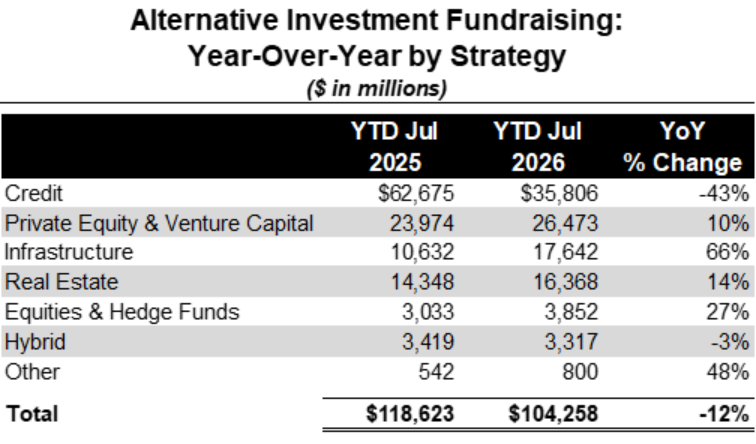
Hard assets with low obsolescence, or HALO strategies, raised $34 billion through July, up 36% from $25 billion a year earlier. The category includes real estate and infrastructure investments, which together accounted for roughly one-third of all alternative-investment fundraising during the seven-month period.
Infrastructure was the largest contributor to hard-asset growth, raising $17.6 billion, up 66% from the same period in 2025. Real estate strategies raised $16.4 billion, a 14% increase.
Hard assets with low obsolescence, or HALO strategies, raised $34 billion through July, up 36% from $25 billion a year earlier. The category includes real estate and infrastructure investments, which together accounted for roughly one-third of all alternative-investment fundraising during the seven-month period.
Infrastructure was the largest contributor to hard-asset growth, raising $17.6 billion, up 66% from the same period in 2025. Real estate strategies raised $16.4 billion, a 14% increase.
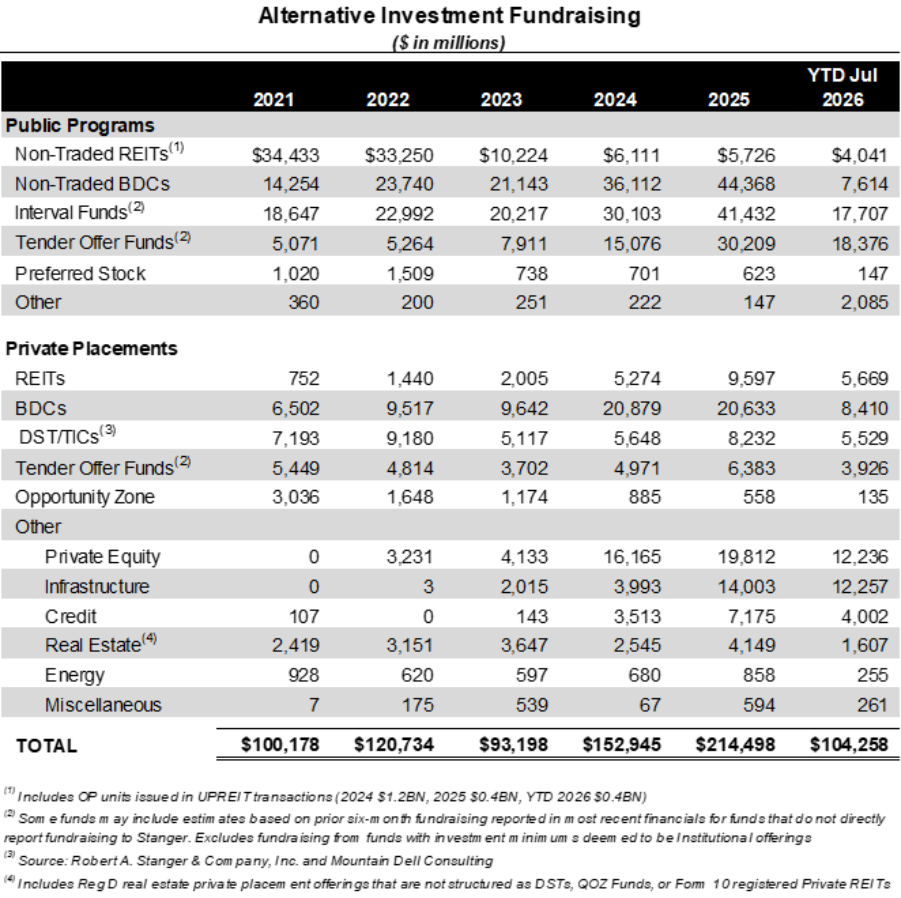
“The market crossed $100 billion in July, but the more telling story is where that capital is going,” Kevin T. Gannon, Stanger’s chairman and chief executive, said. “More than half of the capital raised year-to-date has come in through private placements rather than publicly registered programs.”
Gannon said hard assets have raised more capital than credit for four consecutive months, a pattern he expects to continue in the second half.
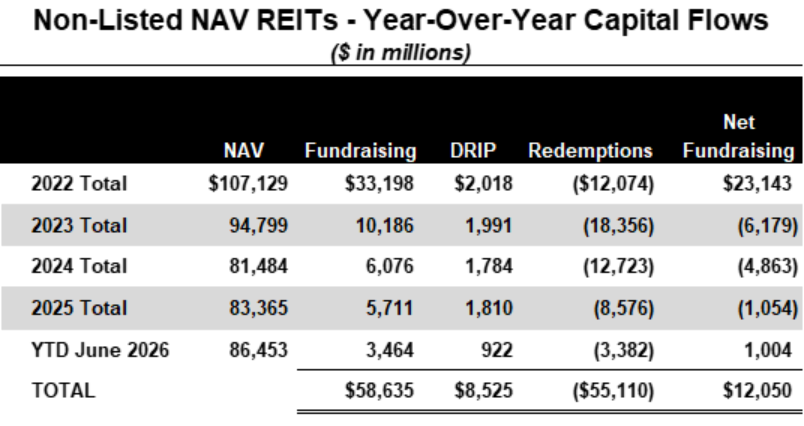
The report also found conditions improving in the net-asset-value real estate investment trust market. Redemption pressure has fallen to its lowest level in more than four years, and net capital formation has turned positive after three years of net outflows, Gannon said.
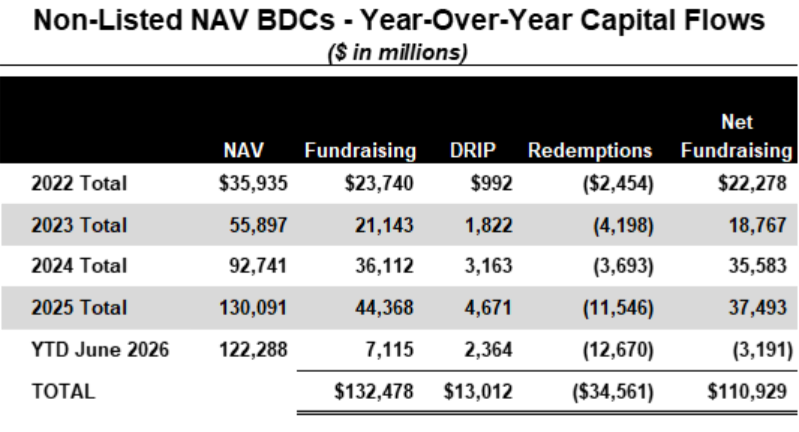
Business development companies, which generally lend to middle-market companies, remain under more pressure. Redemptions continue to exceed new capital in the BDC market, though Gannon said the sector could eventually follow a recovery path similar to NAV REITs.
Connect Money is spotlighting rising stars who have made a valuable contribution to the alternative investments industry. Based on your nomination, we will recognize professionals who have significantly influenced both the workplace and community. The deadline is September 9. Click here to submit your nominations and help us highlight the next generation of leaders.


