



Where Institutional Capital Is Finding Opportunity in CRE
Institutional investors are preparing to deploy an estimated $144 billion into global commercial real estate in 2026, according to Knight Frank, but the recovery is unlikely to lift every property type or market equally. Capital is instead concentrating in sectors with durable demand and locations offering greater certainty around development, financing and execution.
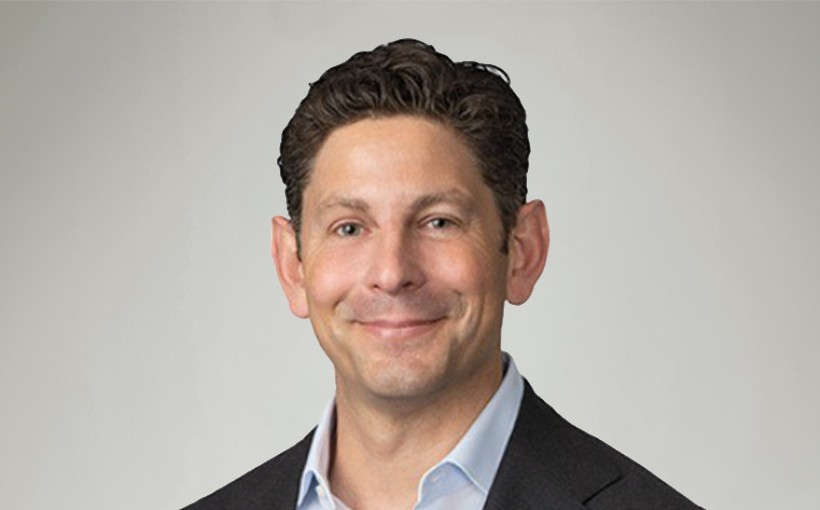
Matt Friedrich, a partner in Polsinelli’s Real Estate practice, discusses the growing value of power-secured data-center sites, continued demand for medical office properties, the city-by-city office recovery, industrial-market headwinds and the role of sovereign wealth funds in financing large-scale U.S. projects.
CM: What is driving institutional investors to return to commercial real estate in 2026, and how does today’s opportunity set differ from the pre-pandemic market?
MF: I think the premise of the question is a bit of an oversimplification. At the beginning of CY 2026 there was an expectation of interest rate reductions, that many asset classes (such as industrial in Southern California) had reached the bottom, and price discovery could now be done effectively. That thesis has not rung entirely true due to a confluence of macro events, among the most impactful of which are (1) inflation caused by increased energy prices resulting from the conflict in Iran, and (2) negativity around artificial intelligence and the development of data centers (including NIMBY-ism, concerns about the future of the US economy as a result of the loss of blue (and white) collar jobs, and constituencies competing for energy). That said, we are seeing institutional investors pursue alternative asset classes attempting to find new opportunities to create value after a handful of years of meaningful underperformance. This means movement away from more traditional investments (where returns have been somewhere between non-existent to underperforming) into data centers and everything that benefits from data center development (including infrastructure and industrial outdoor storage).
At the same time, after being largely ignored, we are seeing a return to retail and office. In my opinion, this is simply a result of prices reaching bottom (due to a lack of investment) and demand outpacing supply. In retail, this is the realization that consumers still want to shop in person (especially if you have a grocery anchor) and as to office, that your traditional tenants (like law firms) will still pay a premium for Class A product (for example, Goldman Sachs and Morgan Staley in Uptown Dallas).
CM: Where is the reported $144 billion of institutional capital most likely to be deployed, and which sectors may struggle to attract meaningful allocations?
MF: See above – data centers will continue to see outsized deployment (both because of the potential yield-on-cost and the capital intensive nature of the development (which is like nothing we have ever seen)). However, the substantial allocations to data centers in 2026 could benefit other product types if investment advisors feel the need to diversify for numerous reasons (including the need to create returns in the short team while the large hyperscale projects can take years to complete (albeit completed in phases)). Healthcare has been an incredible driver of the US economy. It feels like we have been talking about aging populations for years now. However, healthcare continues to be a major creator of jobs in the US. The healthcare model has also changed (with numerous procedures now being done outside of more traditional hospital settings). As such MOB and senior care facilities will continue to see investment.
CM: Why has access to electrical capacity become more valuable than the underlying land in many data center transactions?
MF: Again, I think the premise of the question is a bit off. The data center transactions have always been about acquiring power (rather than land) – you are really transacting at a price/MW vs. a price/SF. More importantly, given the pushback in many States (including California and New York, but more surprisingly Texas), finding land where you have a power allocation that can allow for a 2028 delivery vs. a 2030 or later delivery has become even more valuable. Additionally, technological innovations continue to change the footprint of data center facilities (higher density servers and racks, liquid vs. air cooling, fewer machines needed due to increases in overall GPU power).
CM: At what point in the development process does institutional capital typically enter: land acquisition, entitlement, power procurement or vertical construction?
MF: This is really a “it depends” concept. Traditionally, institutional capital does not take any vertical development risk. That being said, both now and historically, I have worked on numerous transactions where the LPs do take some risk, although not proportionate. So, for example, if you have a traditional 90/10 JV, the pre-development risk may be 50/50 or even more heavily weighted to the GP) to reduce LP risk. Additionally, if LPs come in early (for example, in an office project before there is meaningful pre-leasing) you may see things like (1) forced sale rights if pre-development milestones are not achieved, and (2) flipping from common to preferred equity (at least for purposes of the waterfall) if certain pre-development milestones are not achieved.
CM: Why does medical office continue to attract institutional and sovereign wealth capital when other real estate sectors face greater uncertainty?
MF: See above – this is largely a result of demographics, the continued growth of the healthcare industry in the US, and a change in use of healthcare facilities (surgical centers vs. all procedures being done within the confines of a traditional hospital).
CM: Why are markets such as Uptown Dallas, Midtown Manhattan and parts of Miami attracting capital while other downtown office districts remain under pressure?
MF: Given that I represent the family that developed and still owns the Harwood District, I think I can speak to this with some meaningful authority. COVID accelerated population movement away from urban centers and that movement has continued as a result of many factors including poor governance, a cost of living that most cannot afford, an increase in homeless and crime, and budget constraints that have impacted public services including education.
As a result talent has relocated (and is much more willing to relocate than it had been previously) to places like Dallas and Miami, and investment follows (Goldman Sachs and Morgan Staley in Dallas; Citadel in Miami; Tesla and Space X in Austin and Starbase). Governmental officials that demonize capitalism and wealth (Mamdani in NYC and DSA candidates across the US, including Nithya Raman in Los Angeles) and see greater regulation and taxation as an answer will continue to move business investment to Texas and Florida.
Regardless, Manhattan is just immune – it remains the center of the financial universe and there is a tremendous amount of talent and wealth that simply will not leave. While relocation to places like Dallas and Miami makes sense, not having a presence in New York is both unthinkable and potentially catastrophic.
CM: Why are sovereign wealth funds particularly well suited to financing large-scale U.S. commercial real estate developments?
MF: They have a large pool of (somewhat) patient capital. They also need to deploy it into safe haven investments (US real estate being among the most attractive). Commercial real estate investments, like for all investors, also provides an alternative to more traditional investments like equities and fixed income assets, and can provide a hedge against inflation.
CM: Looking across data centers, medical office, traditional office and industrial properties, where do you see the strongest risk-adjusted opportunity over the next two to three years?
MF: Based on the reasons provided above, medical office and senior care provide the greatest risk adjusted opportunity. They are substantially less capital intensive than data center development and must less controversial (senior care facilities are not the lighting rod that a data center development on what was once farmland in Kansas is). At the same time, the yields are compelling. Due to demographics, healthcare demand is not going to change in the near term, so occupancy will remain strong as will interest investor interest as, among other things, surgical centers and health systems continue to expand and the need for newer and more highly amenitized (and specialized) senior care facilities grows.