



The Office Market’s Reset Is Creating Opportunity for Those Who Know Where to Look
The office sector has spent the past several years in an uncomfortable spotlight — navigating post-pandemic uncertainty, rising vacancies, tightening credit, and a wave of maturing loans that has left many owners with difficult choices. For opportunistic investors willing to look past the headlines, however, the dislocation is creating a buying environment unlike anything seen in years.
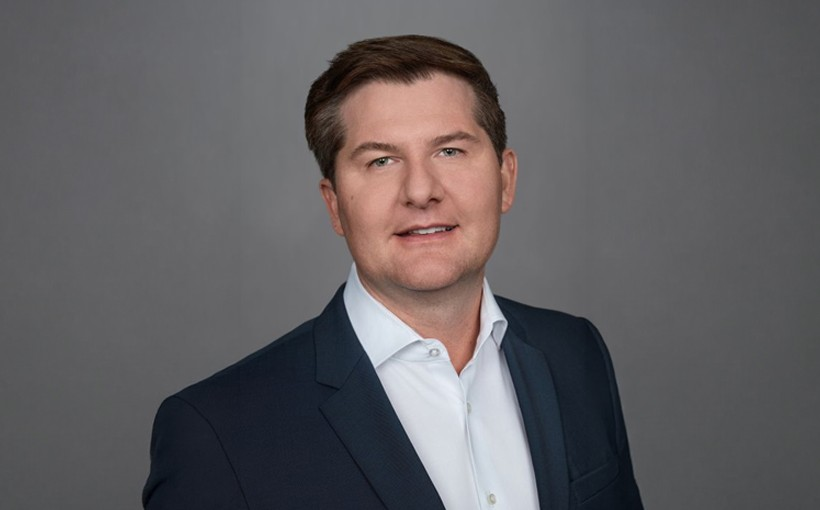
Adam Abeln, Chief Acquisitions Officer at Real Capital Solutions (RCS), is one of those investors. With RCS actively acquiring discounted office assets it believes are fundamentally sound but caught in broader market repricing, Abeln discusses how sophisticated capital is evaluating risk, pricing distress, and positioning for the next chapter of office real estate — including the growing conversation around adaptive reuse and office-to-residential conversion.
CM: How would you characterize where the office market is in its reset right now — are we closer to the beginning of the distress cycle or the end?
AA: We are now about two years into the downturn in office values and while prices seem to be stabilizing, defaults have not peaked. This means there will still be rising defaults, foreclosures and forced sales. It’s important to understand the dynamics of the real estate cycle and how financial distress lags weaker fundamentals. For instance, following the Great Financial Crisis (GFC), office vacancy declined for four quarters before cap rates peaked and three years before delinquencies peaked. In this cycle, office delinquency rates have already exceeded the GFC and continue to rise.
CM: Where are you finding the most compelling acquisition opportunities geographically and by asset class within the office sector?
AA: The most compelling opportunities are for high-quality assets with ownership in financial distress. These are typically Class A buildings in markets with historically strong employment growth. These are usually not gateway markets, but we’ve also acquired assets in the outlying New York metro area as well as Washington D.C. Because current ownership often does not have the capital to keep or attract tenants, the occupancy has fallen into the 60%-80% range. And with debt maturing into much lower valuations, the ownership either gives the property back to the lender or works out a discounted sale price. Of the 14 deals we have acquired since late 2024, our average cap rate is 12.6%.
CM: How are you thinking about tenant demand — are there specific industries or tenant profiles that give you more confidence in a building’s long-term viability?
AA: To paraphrase Mark Twain, reports of office’s death are greatly exaggerated. Our tenant may vary considerably but one thing the tenants all have in common is the need for high quality space. Their office space reflects how their customers, clients and even their own employees perceive them. The space must be attractive enough to bring employees in and to promote and maintain a company’s corporate culture.
The key to our returns is looking at each asset as a stand-alone operating business, which means developing a detailed plan for retaining tenants and attracting new ones, a process we call “winning the leasing wars.” It’s not enough to buy low, you still must add value. This is an active business, not passive. Even with the rise in remote working, our focus on adding value is resulting in leasing activity ahead of pro forma.
The way office space is used continues to evolve, but because of the quality of our assets, we don’t see a fundamental shift from office. On the other hand, we are not interested in back-office assets such as call centers or low-skill office work sites. Those buildings essentially obsolete.
CM: What does adaptive reuse look like in practice for the assets RCS is acquiring? Are conversions economically viable at today’s acquisition prices?
AA: Adaptive reuse is not a part of our office strategy. We’ve considered it but the costs for converting office space into residential is very high – typically higher per unit than the cost of new construction. To make the numbers work will require rents that are well above market. Further, we are bearish on residential right now, seeing little upside potential and significant downside risk. By contrast, our office investments are a far safer asset. Our deals generate cash flow from the start.
CM: What does the financing environment look like for office acquisitions right now, and how has that changed your approach to deal structuring?
AA: Lenders are slowly returning to the market, but financing remains tough. Ironically, the difficulty in getting loans is one of our competitive advantages when we’re buying. Over our 40+ year history, RCS has built a stellar reputation with lenders – we’re never defaulted or even been late on a payment on our bank loans. Further, our CEO and main sponsor on the deals have long believed in personally guaranteeing our loans. That history along with a fortress balance sheet allows us to get financing when other buyers cannot.
CM: What do investors who are sitting on the sidelines misunderstand about the office market opportunity today?
AA: Investors on the sideline are missing a generational opportunity. Many investors are reactive, not proactive, and what they are overlooking is that now is the safest time to buy office. One of the key values within RCS is our reliance on research and deep analytics to understand exactly where we are in the cycle. Since our inception, we have taken acontrarian approach, which means we buy when everyone is selling and sell when everyone is buying. And as a wall of debt continues to mature, everyone is selling. Values are at or near cyclical lows. Our deals cash flow from the start and we’re buying at cap rates that are often 500-600 bps above our interest rate. Office is not dead, and fundamentals are already in recovery.
CM: Where do you expect the office sector to be in three to five years — and what has to happen for that recovery to take shape?
AA: Over the next three-to-five-years, we expect fundamentals to continue to slowly recover. We’re seeing that now as our leasing teams continue to
“win the leasing wars.” The discounted buying we’re experiencing now will likely be around for another two or three years. Still, our first 14 deals have proven our thesis that not only will the office sector recover, but the deals right now are truly once-in-a-lifetime. To capitalize on this environment we are now launching the RCS Distressed Office Fund. The fund will provide investors with access to what we believe is one of the most compelling opportunities in commercial real estate through a proven operator with a demonstrated track record.