


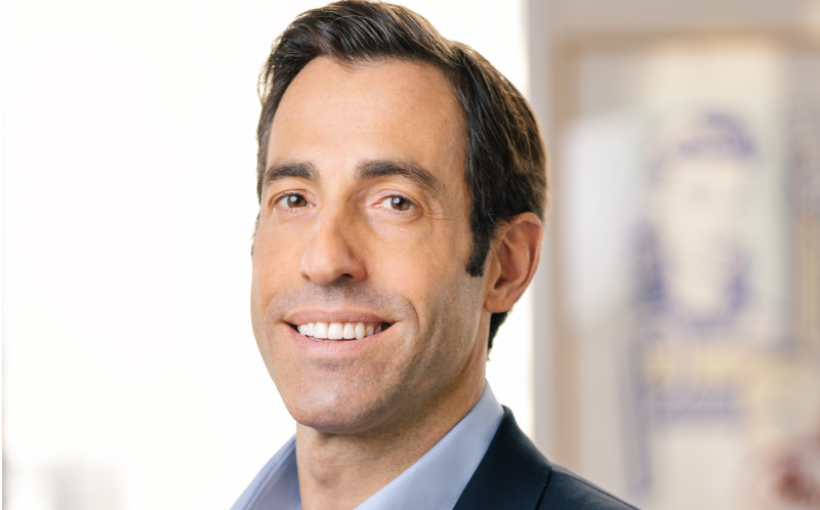

Research Over Noise: Baron Capital’s David Baron on Long-Term Investing in an Uncertain Market
In a market saturated with products, themes and factor labels, many RIAs and financial advisors say their toughest task is separating truly differentiated managers from a sea of lookalikes.
David Baron, co-president and portfolio manager at Baron Capital, has spent nearly two decades helping apply the firm’s bottom-up, research-driven investment philosophy across strategies tailored to clients’ needs. He discusses how Baron thinks about long-term ownership, why exhaustive fundamental research matters even more in an era of AI and macro noise, and how advisors can evaluate managers’ processes when building durable, wealth‑generating portfolios.
CM: What should advisors be looking for when evaluating whether a manager is truly differentiated versus simply well-marketed?
DB: When evaluating whether a manager is truly differentiated, advisors should look for a few telling characteristics. First, differentiated managers know their investments. They should understand each company’s long-term growth prospects and how the company will achieve them. Second, the manager’s interests should be aligned with the client’s interests—e.g., the manager has a high percentage of their net worth in their strategies. Finally, advisors should focus on the strategy’s active share, which will show how different it is from an index and/or its peers. The differentiation creates excess returns over time, sometimes with significantly less risk.
CM: In periods of heightened volatility, what are the key signals you and your team watch to distinguish temporary drawdowns from true thesis breaks?
DB: For long-term investors, it is critical to know the difference between a temporary drawdown and a broken investment thesis. There is no magic bullet—we base our views on our rigorous research process. When volatility rises, we are in close contact with management teams to understand whether the market reaction reflects a secular change at the company. We also look at insider purchases; an increase typically supports our thesis that valuations continue to be attractive. Finally, we talk to competitors, suppliers, and customers to determine if the volatility is impacting their business and, if so, why. Together, we use this research and data to determine whether the decline is short-term or requires us to sell the stock.
CM: How are you incorporating AI and new data tools into your research process without letting them dilute the fundamental, bottom-up work?
DB: We use AI to improve our research process and to make us more productive, but it is just one of our tools. It does not—and cannot—replace our fundamental, bottom-up approach. We continue to talk to management and conduct primary research calls while modeling the company’s income statements, balance sheets, and cash flow statements. We want to understand a business’s strategy and its growth potential over the next five years. If we believe a stock can double within that time period—based on reasonable growth assumptions and historical multiples—we will use drawdowns to buy more stock or initiate new positions.
CM: Are there sectors or themes today where you believe the market is still underestimating long-term growth potential?
DB: Yes, we believe some of the software and consumer names are being ignored or misunderstood by investors. Many of our software investments continue to grow their recurring revenue at high-double digit rates or better with margins expanding and cash building. Despite these solid fundamentals, these securities are trading at trough multiples.
As a result, the stocks are seeing significant insider purchases, which is one indicator that the stocks remain attractive and that their business models are not broken. The same is true for our consumer company investments. These businesses continue to grow strongly in a large and expanding addressable market. They enjoy strong margins, which are generating excess cash for both further investment in their businesses and capital return to shareholders. Like software companies, many of them are seeing heavy insider purchases.
CM: What lessons from previous market cycles continue to shape your investment decision-making today?
DB: One important lesson is that we don’t let market cycles drive our investment decisions. We have experienced all kinds of market sentiment over more than four decades of investing—from irrational exuberance to collective despair. While we are aware of how a cycle can impact market perception of a holding, we stay focused on each business’s fundamentals and its long-term prospects. As part of our approach, we also don’t get caught up in a company’s daily stock price. A declining stock does not necessarily indicate something is wrong, just as a rising price does not mean everything is great. We do our own research, and we have confidence in ourselves and our process. As part of this approach, we trust but verify. We believe in our research but make sure to do the diligence—both primary and secondary—to help ensure we are seeing the whole picture and accurately determining what a business can become over time.