




BDCs Face Net Outflows as Investors Favor Hard Assets
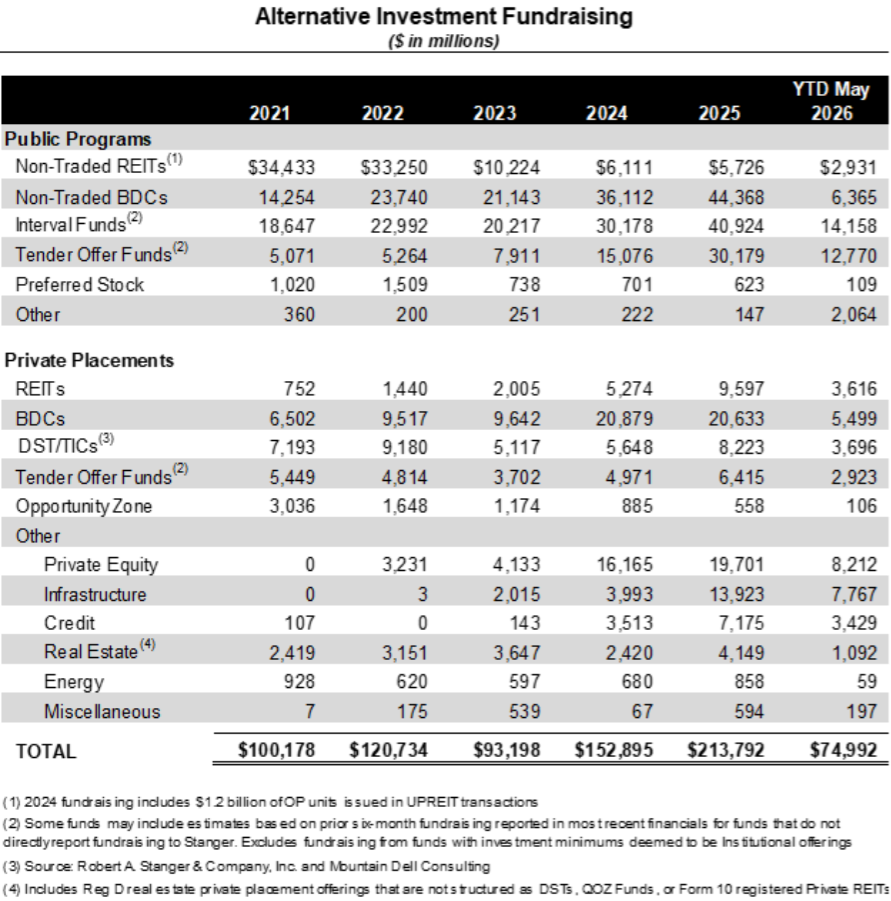
Alternative investment fundraising slowed in early 2026 as investors pulled back from credit strategies and business development companies while directing more capital toward hard assets with durable demand. Through the first five months of the year, alternatives raised about $75.0 billion, down 9% from $82.8 billion in the same period of 2025, according to Robert A. Stanger & Company.
The decline was concentrated in BDCs and credit-oriented funds. Combined fundraising for publicly registered and private placement BDCs totaled roughly $11.9 billion through May, a 55% year-over-year drop. Over the same period, BDC redemptions reached about $12.9 billion, producing net outflows of around $1.0 billion. Across all credit strategies, year-to-date fundraising came in at approximately $27.9 billion, down 37% from a year earlier, Stanger’s latest Market Pulse report showed.
Outside of credit, hard-asset, low-obsolescence (HALO) strategies continued to show relative strength. Real estate and infrastructure funds together raised about $23.1 billion through May, a 33% increase from the first five months of 2025. Infrastructure strategies led the way with a 61% year-over-year gain, a figure that includes the recent Blackstone Digital Infrastructure Trust public offering, while real estate strategies rose 12%.
Year-to-date gross fundraising by product category through May 2026:
“Through five months, 2026 has been defined by a clear rotation out of credit,” said Kevin T. Gannon, chairman and CEO of Stanger. He noted that credit’s share of total alternative fundraising has fallen from more than half of the market to roughly one-third, reflecting investors’ growing preference for infrastructure and other hard assets supported by durable, long-term demand trends rather than a retreat from alternatives overall.