


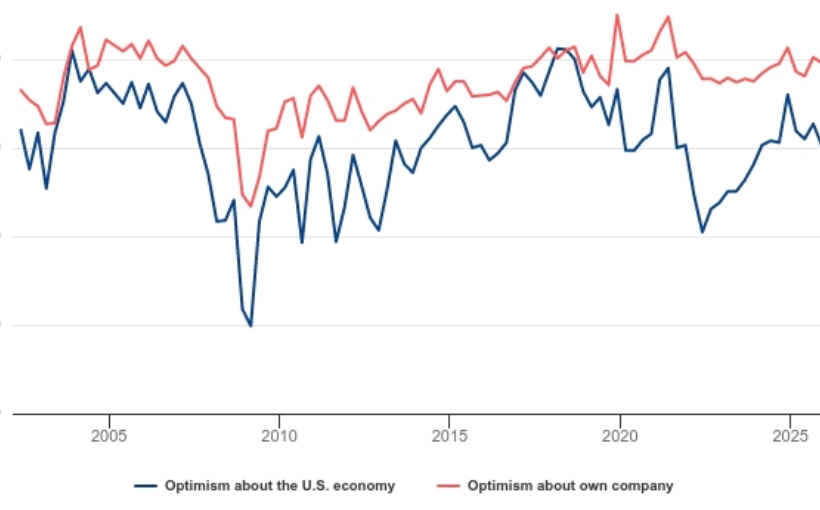

CFO Optimism Slips as Inflation Reemerges as Top Business Concern
Financial executives grew slightly less optimistic about the U.S. economy during the second quarter as inflation, rising costs and geopolitical uncertainty weighed on business sentiment, according to the latest CFO Survey conducted by Duke University’s Fuqua School of Business and the Federal Reserve Banks of Atlanta and Richmond.
The survey found that chief financial officers lowered their outlook for economic growth and increased expectations for both costs and prices in 2026, reflecting concerns that inflationary pressures may prove more persistent than previously anticipated.
On a scale of 0 to 100, CFOs rated their optimism about the overall U.S. economy at 60.6, down from 61.7 in the first quarter. Inflation returned as the most frequently cited business concern, followed by non-labor costs, while geopolitical risk appeared among the top concerns for the first time.
Executives also reduced their forecast for real U.S. GDP growth over the next four quarters to 1.8%, down from 2.1% in the prior survey. At the same time, respondents increased their projections for unit cost growth and price growth by 1.1 percentage points.
Despite a more cautious macroeconomic outlook, business spending remained resilient. More than half of surveyed firms, 50.4%, reported increasing spending excluding capital expenditures during the previous three months, up from 43% in the first quarter.
A special section of the survey examined the impact of higher oil prices. Nearly two-thirds of respondents said rising energy costs had increased their firms’ operating expenses, yet only about one-third reported passing those costs through to customers.
However, executives indicated that if oil prices were to average $120 per barrel through year-end, cost pass-through would accelerate significantly. Under that scenario, firms projected unit cost growth of 7.3% and price growth of 6.7%.
“One striking feature of the current situation is that while firms have absorbed much of the recent increase in energy costs, a sustained rise in oil prices would likely lead to far greater pass-through to customers,” said Atlanta Fed economist Brent Meyer.
The survey included responses from 530 CFOs and was conducted between May 18 and June 5.

