


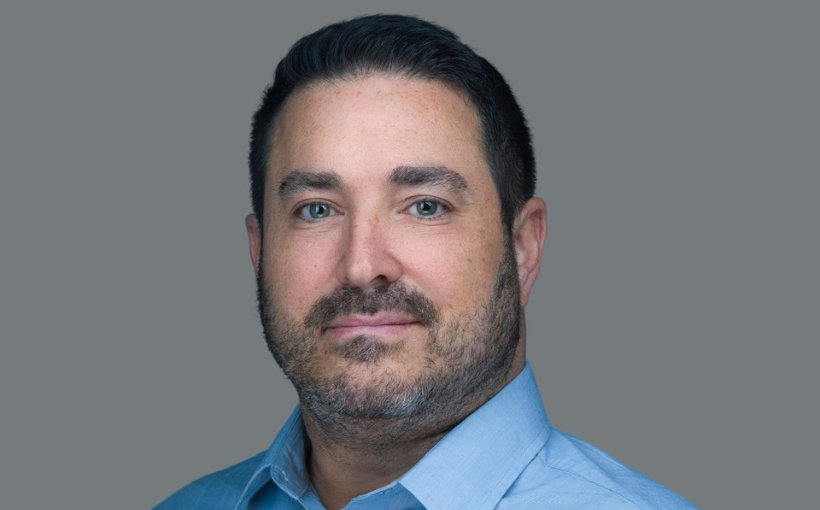

The Role of Fund Administrators: Q&A with Reliant Fund Services’ Eric Schultz
Over the past 15 years, the private markets industry has ballooned, fueling a rising need among alternative asset managers for middle and back-office support to keep their growing operations humming. As the industry’s scaled up, so have the headaches—tougher regulations, stricter compliance, and more selective investors—making it a no-brainer for many managers to outsource back-office tasks to third-party fund administrators. But what exactly is fund administration and what services do fund administrators provide?
Eric Schultz, managing member at Reliant Fund Services, offered his views on the role of a fund administrator, what managers should be looking for when selecting an administrator, and how technological advancements have improved the business, among other topics.
CM: Can you describe your role as a fund administrator?
ES: Our role as a fund administrator is to provide comprehensive back-office support that ensures the accurate and efficient management of a fund’s financial operations. This includes fund accounting, investor reporting, treasury and cash management, transaction processing, audit and tax support, management company accounting, and other services.
While fund administrators are often seen as back-office service providers, our role extends beyond transactional tasks. We work closely with their management team, collaborating closely to support their operational and strategic goals. Our clients think of us as an extension of their team.
CM: What should fund managers look for in a fund administrator?
ES: When selecting a fund administrator, fund managers should focus on four key factors: technology, people, reputation, and cost.
First, fund administrators with a robust technology infrastructure and proven processes can provide efficient, accurate, and reliable service. Leveraging industry-leading systems ensures data accuracy and provides fund managers and investors with secure, real-time access to critical information through cloud-based portals.
The most important factor is the people. It is essential that your fund administrator is staffed with employees that have deep industry expertise. Look for administrators who offer dedicated points of contact to coordinate activities across fund accounting, investor servicing, and treasury functions, ensuring seamless communication and accountability.
Employee turnover at a fund administrator is something that should also be evaluated. Throughout a fund’s life, there are many unique transactions that may occur that are very specific and sometimes complex. If fund administrator team members resign, that institutional knowledge will likely go with them. To mitigate this, one might want to work with a fund administrator who has very low turnover, a great training program and an excellent documentation process.
Next, a fund administrator’s track record speaks volumes. Request references to gain third-party insights into their performance. A history of reliability, accuracy, and strong client relationships can be a strong indicator of future success.
While cost is always an important consideration, it should be evaluated alongside the value provided. The cheapest option usually does not always deliver the level of service, technology, or expertise required to support your fund’s growth and compliance needs.
CM: What types of funds do you typically work with?
ES: We specialize in working with U.S.-domiciled funds, including private equity, venture capital, fund of funds, private debt, real estate, and infrastructure funds.
CM: How has technology improved fund administration?
ES: Fund administration technology has evolved significantly over the years. In the past, processes were manual and time-consuming, with journal entries recorded on sixteen-column worksheets. A single mistake could take an entire day to identify and correct. We have come a long way since then.
First, technology has made accounting more efficient and accurate. Industry-leading accounting software has made it possible to provide full audit trails and ensure posting accuracy.
Second, digital reporting has enabled fund administrators to deliver critical information—like investment return calculations—on secure, digital platforms anytime.
Third, with increased regulatory reporting and requests for more granular investor reporting, fund managers require data in an easily accessible and discernable format. Fund administrators have invested heavily in technology to support managers’ need for timely data.
Lastly, technology has improved access to real-time reporting and overall productivity.
CM: What are the key differences in fund administration for private equity, venture capital funds, and other alternative assets?
ES: While there are many similarities in administering different types of funds, key differences often stem from fund structure:
Private equity & venture capital are typically closed-end funds, where investors commit capital over the fund’s life (usually 10–12 years). Fund administration involves unique accounting nuances related to capital calls, distributions, and performance fee calculations. Additionally, private investments require specific valuation methodologies and systems. Unlike open-end funds, closed-end funds have a fixed capital commitment over the fund’s life.
Hedge funds, in contrast, are generally open-end, with investors able to subscribe or redeem at specified times. These funds often invest in publicly traded securities, with frequent valuation and flexible reporting needs. Fund administrators must accommodate complex fee structures, liquidity management, and regulatory requirements.
Given these distinctions, fund managers should ensure their fund administrator has expertise tailored to their specific fund type.
CM: What is the biggest challenge in fund administration today?
ES: The biggest challenge is managing and interpreting data. Administrators must process vast amounts of data from diverse sources, transforming it into accurate, actionable insights for financial reporting, regulatory compliance, and investor communication.
Adopting a data-first approach not only enhances reporting efficiency but also empowers fund managers to make more informed investment decisions.
CM: What advice would you give to fund managers when selecting a fund administrator?
ES: Choosing the right fund administrator can be challenging, as many firms offer similar services. Our advice to fund managers is to select a partner—not just a service provider.
Look for an administrator that takes (1) a proactive approach, identifying opportunities to improve efficiency and mitigate risks before issues arise. (2) Someone that acts as an extension of your team, offering hands-on support to tackle complex accounting and operational challenges and (3) Demonstrates a commitment to your success, with a collaborative mindset focused on long-term partnership, not just transactional service.
Ultimately, the right fund administrator will add value beyond just accounting and compliance, supporting your fund’s growth, performance, and investor confidence.