


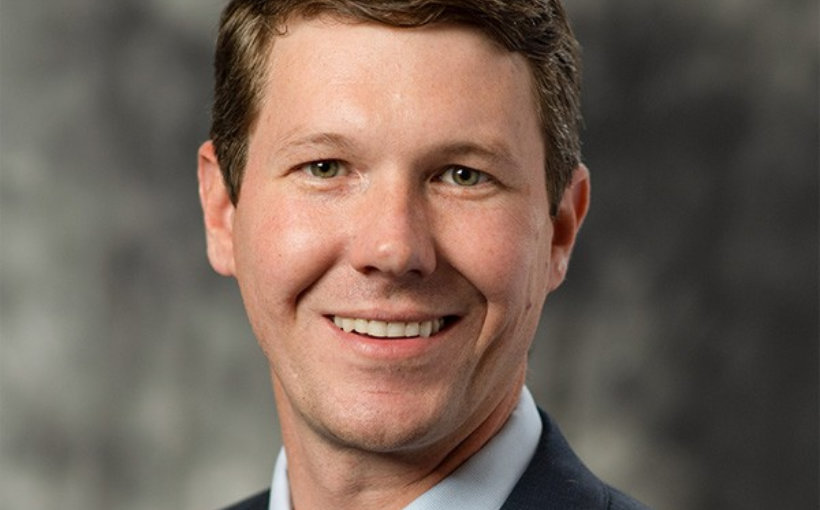

What You Need to Know About Active ETFs: Q&A with Touchstone’s Matt Barry
The demand for active exchange-traded funds (ETFs) among financial advisors and their clients has been increasing as they seek more flexibility, transparency, and liquidity with active strategies. Active ETFs combine the benefits of active management (potential for higher returns) with the liquidity and cost-efficiency of traditional ETFs. As investor appetite for dynamic strategies grows, active ETFs are gaining momentum across both retail and institutional sectors.
A recent study by Cerulli Associates highlighted the growing shift in investor preferences with ETFs. Client assets in ETFs are expected to surpass those in mutual funds within approximately one year, signaling a significant change in investment behavior. Advisors project that by 2026, 25% of client assets will be allocated to ETFs, while just 24% will be invested in mutual funds.
Matt Barry, Touchstone Investment’s Head of Capital Markets & ETFs discussed what advisors should be asking when it comes to ETF exposure, the growing interest to invest in ETF products over mutual fund products, the company’s latest active ETF launch – Touchstone Sands Capital US Select Growth ETF – and some of the trends he’s watching in 2025.
CM: What are the most frequently asked questions about ETFs from financial advisors, and which questions should advisors be asking?
MB: We’re having many discussions with financial advisors about how active ETFs can fit in client portfolios. Historically, most ETFs were passively managed, so we’ve observed a need for education about the rapidly growing segment of actively managed ETFs. Financial advisors typically use active ETFs to help achieve client goals in a similar way as they’ve historically used active mutual funds, while also gaining structural benefits from the ETF vehicle such as tax-efficiency and a lower cost profile.
Another topic we’re discussing frequently is ETF liquidity and how financial advisors can trade ETFs. While many newly launched ETFs have fewer dollars invested and may be relatively lower in volume, it’s important to understand how ETFs are able to tap into the liquidity of the underlying securities of the portfolio. It’s also important for financial advisors to understand what resources are available to them, such as their firm’s block trading desk or an ETF issuer’s capital markets team.
CM: Research indicates that ETF investing is gaining ground on the mutual fund structure, as it has become increasingly popular among wirehouse advisors and independent RIAs. What is the impetus for this?
MB: Investors have shown a growing preference for the ETF structure for years. In 2024, mutual funds experienced net outflows of nearly $400 billion while ETFs realized $1.1 trillion in net inflows.* We believe the trend towards ETFs has been driven by the vehicle’s structural benefits, including tax-efficiency, lower expense ratios, and liquidity.
Additionally, the SEC’s adoption of the ETF Rule (Rule 6c-11) in 2019 has streamlined the process for launching ETFs, making it faster and less costly for asset managers to bring new products to market. This regulatory development has further encouraged growth and innovation in the ETF space and resulted in a broader range of ETFs available to financial advisors. In particular, the ETF Rule led to the launch of many actively managed ETFs because it leveled the playing field by allowing ETFs to use tools like custom baskets that can promote tax-efficiency but were not widely available to all ETF issuers prior to the ETF Rule.
CM: Tell us about your latest launch – Touchstone Sands Capital US Select Growth ETF. How is it structured?
MB: The Touchstone Sands Capital US Select Growth ETF (TSEL) launched in January 2025, and is the eighth actively managed, fully transparent ETF in our suite of offerings. The Fund invests in a concentrated portfolio of US-based growth companies, with an emphasis on large and mid-cap firms. It is sub-advised by Sands Capital, an institutional asset manager that has had a singular focus on growth equity investing since its inception in 1992.
Sands Capital has an experienced team of more than 40 investment professionals that focus on bottom-up, fundamental analysis that seeks to identify leading growth businesses. TSEL will typically hold a high-conviction portfolio of 25-35 of Sands’ best ideas, leveraging an active, research-driven strategy with high growth potential.
CM: What are some of the variables you consider when creating new ETFs?
MB: When assessing new product development ideas, one key thing Touchstone evaluates is where there is demand from our intermediary clients. We assess that both quantitatively – which categories are seeing net inflows – and qualitatively – where are we hearing interest from financial advisors and gatekeepers. We also assess potential sub-advisers and strategies through our rigorous due diligence process that assesses five broad areas of criteria: organizational stability, personnel, investment discipline, infrastructure, and results.
Touchstone provides access to experienced institutional asset managers with demonstrated investment success that is not available to the typical investor. Finally, we consider the vehicle used to deliver the strategy. Is an ETF the right vehicle for a strategy, depending on its liquidity profile?
CM: What are some of the ETF trends you’re keeping an eye on in 2025, and how do they inform Touchstone’s strategy?
MB: I expect active fixed income to continue to be a topic of interest in 2025. We are having discussions about our three fixed income ETFs because advisors regularly look for ways to generate income and actively manage risk for their clients. Another area we’ve heard interest in from clients is emerging markets ex-China. Advisors look for emerging markets exposure as part of a diversified portfolio, but sometimes clients have investment-related or political-related concerns about Chinese investment exposure. We think there is a need for more product development in this space in 2025 to address growing demand and provide clients with access to investment opportunities.
Another potentially significant trend to monitor is ETF share classes within mutual funds. Vanguard has offered ETF share classes for its index funds since 2000. It held a patent on the concept for more than two decades before it expired in 2023. Since then, more than 40 asset managers have applied for exemptive relief from the SEC to launch ETF share classes. If approved, ETF share classes could potentially offer benefits to shareholders and result in the launch of many new ETFs that offer strategies that were previously only available through a mutual fund vehicle. While the outcome and timing of a potential SEC approval is uncertain, it is a key topic to monitor throughout 2025.
*Source Morningstar Direct