


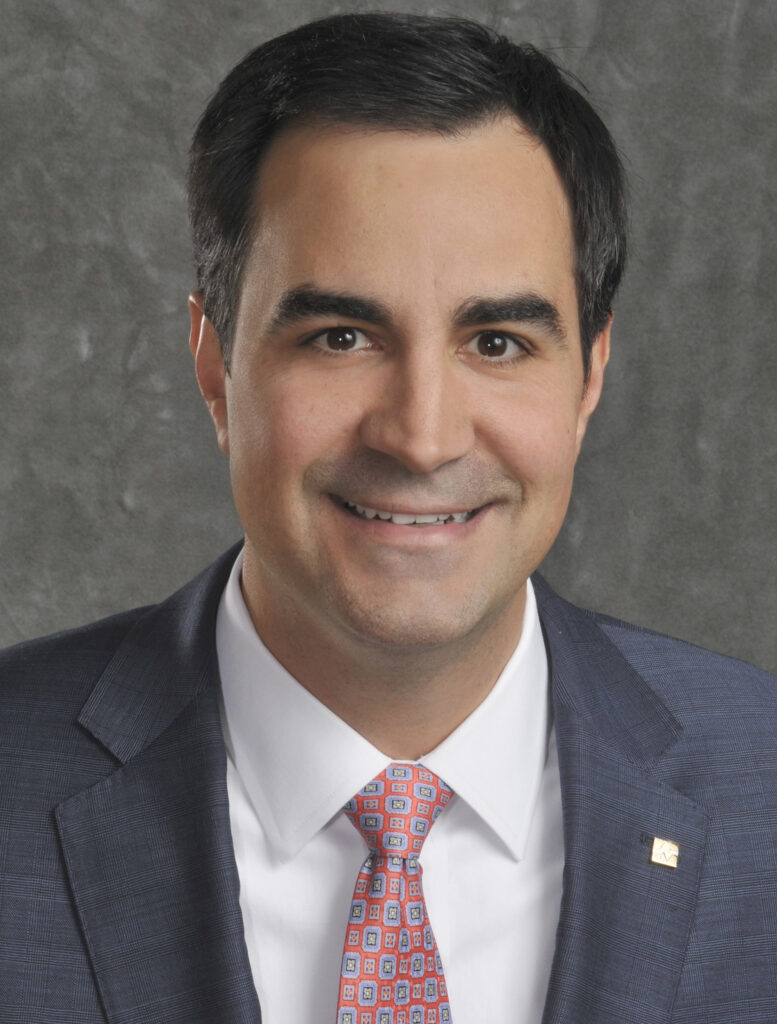

Keys to Talent Development and Retention: Q&A with Edward Jones’ Aaron Ladner
Failure to put together a strong, devoted financial advisory team can have lasting effects. Without the appropriate people in place, financial services firms risk losing the passion and knowledge that distinguishes them from their competitors. This, in turn, might result in stalled growth, decreased client satisfaction, and a damaged brand reputation.
Aaron Ladner, principal, enterprise learning at Edward Jones, shared his views with Connect Money about the critical need to develop, train and retain top talent, the firm’s steps in producing the next generation of financial advisors, and what the top challenges and opportunities will be for 2025, among other topics.
CM: What is talent development and why is it important?
AL: Talent development at Edward Jones is first about making sure our financial advisors are best equipped to serve our clients by helping them achieve their financial goals. Providing pathways for growth and career advancements are also a priority.
We offer our clients a personal, goals-based approach to building long-lasting financial strength. That means our financial advisors must have the knowledge and tools they need to support clients on their journeys to financial wellness.
CM: What is Edward Jones doing to develop the next generation of talent?
AL: We continue to invest in training and development opportunities to help financial advisors across generations serve clients deeply and build thriving practices. We’re helping financial advisors set their learning goals, offer coaching, and now pay for and provide support for 24 different industry designations, such as the Certified Financial Planner® certification and Chartered Financial Consultant® designation.
In fact, Edward Jones has more colleagues in the U.S. with the CERTIFIED FINANCIAL PLANNER® (CFP®) certification than any other firm in the industry. Nearly 5,000 CFP® certificants are part of the firm and we were the first firm to add more than 1,000 CFP® certificants two years in a row.
This is a testament to our commitment to continuous learning and our ambition to serve more clients more completely.
CM: Do you have an internal mentoring program?
AL: Mentorship and volunteerism are part of our culture at Edward Jones. We have a robust mentoring program, and we intentionally incorporate it into a financial advisor’s experience. Edward Jones financial advisors enjoy freedom and flexibility but never have to go it alone. Local financial advisors are mentors and advocates for one another.
Every Edward Jones financial advisor is supported by thousands of associates in our headquarters, Product Partners, and a local community of financial advisors who provide ongoing training, growth resources and more. For example, we have an entire Practice Management Team dedicated to helping our financial advisors grow their businesses through personalized consultation and ongoing education.
Our culture of coaching is unique in the industry and ensures financial advisors from a wide variety of backgrounds get the support and feedback they need from experienced advisors to successfully build their practices or assimilate into the team they are joining.
CM: What advice would you give prospective advisors looking to enter the industry?
AL: I’d recommend they look for a firm that will invest in their growth and provide opportunities to help them on their journey. This could include mentoring programs, formal training and coaching, leadership opportunities and tuition reimbursement, which will set them up for success early to build a robust career. Earning these designations requires a great deal of time, effort and commitment and the achievement shows financial advisors’ dedication to reaching their potential.
We’ve long been known in the industry for our training programs and this year were named to the Training APEX awards list by Training magazine for the 25th consecutive year*.
CM: How does Edward Jones attract experienced financial advisors?
AL: Most importantly, financial advisors are attracted to Edward Jones because of the flexibility to choose how they run their practice. They choose how and when to build their client support teams, which is a big draw. We believe experienced financial advisors are looking for ownership in how to serve their clients and build their practices. Our partnership structure uniquely offers this.
Edward Jones’ culture is also a draw for these experienced financial advisors. We are collaborative – not competitive – with each other, which allows each financial advisor to run their practice in the right way for clients. Our financial advisors often mention that they love being able to consult with other financial advisors about their practice with no worries about rivalry.
Lastly, we find experienced financial advisors want to leave their legacy with us. They know that entrusting someone else with the clients they’ve worked with for years (if not decades) can feel difficult. Our turnkey succession planning tools ensure a seamless transition for clients and provide fair and competitive compensation for the retiring financial advisor. When a financial advisor or team is ready to make the transition, they know they’re taken care of and that they can set the pace. That can feel good, especially when they’ve taken care of so many clients during a similar process.
CM: Does the size of a financial advisory firm make it more or less difficult to obtain and retain talent?
AL: The size of our firm can and does attract and retain talent. We’re able to offer a wide variety of resources and experiences based on our size and our collective expertise is deep, which makes our financial advisors better equipped to serve their clients.
Unlike many financial organizations, Edward Jones purposefully remains a privately owned partnership. Without having to meet the short-term expectations of shareholders, we can solely focus on what’s best for our clients — and we know helping our financial advisors grow their acumen supports this. Further, our model allows them the flexibility to choose how they run their practice.
CM: What strategies can help financial advisors develop a robust growth plan?
AL: Financial advisors should know their goals and then tap into all the resources at their disposal to create a growth plan to achieve those goals. For instance, professional development opportunities like coaching and designations offer financial advisors the chance to hone or expand their knowledge. Edward Jones offers career-long professional development to help financial advisors integrate what they’ve learned into their practice.
Financial advisors should also tap technology to grow their practice. Edward Jones is investing $1.5 billion in new financial technology to empower financial advisors with solutions that will help them best serve clients. For instance, our integrated technology offers our financial advisors innovative portfolio, planning and business management solutions.
CM: What will be a requirement for financial advisors over the next five years that either does not exist, or is not widespread today?
AL: With the $84 trillion generational wealth transfer underway, financial advisors must prepare their clients by encouraging wealth planning and open communication with their loved ones. Younger generations like Millennials and Gen Z are not only poised to inherit wealth, but they are also in their prime earning years and are navigating major financial milestones like purchasing their first home, paying down debt and starting a family.
Financial advisors should focus on attracting households earlier in life, strengthening asset retention during wealth transfer, and enhancing capacity to serve clients who are building wealth. It will be critical for financial advisors to understand the preferences of younger clients to provide comprehensive solutions and advice through personalized experiences, guidance and tools.
CM: What will be the top challenges facing financial advisors in 2025? What will the opportunities be?
AL: In 2025, financial advisors should prepare for an impending business succession boom. The average age at which business owners plan to pass on their business is 63 years old – and the majority of small business owners are over the age of 55 (51%)**. While many business owners may be thinking about retirement, some are not fully prepared for the emotional and challenging process of selling their business.
In fact, Edward Jones’ research shows that 38% of business owners who have yet to create a succession plan feel their business is not yet at a stage where succession planning is a priority. This succession boom offers an opportunity for financial advisors to engage with their business owner clients and ensure they’re prepared for the transition.
* 2024 Training Magazine Training Apex Award, published February 2024, data as of September 2023, application fee required for consideration.
** U.S. Census Bureau, Business Owners’ Ages: Over Half of U.S. Business Owners Were Age 55 and Over, published September 2020.