


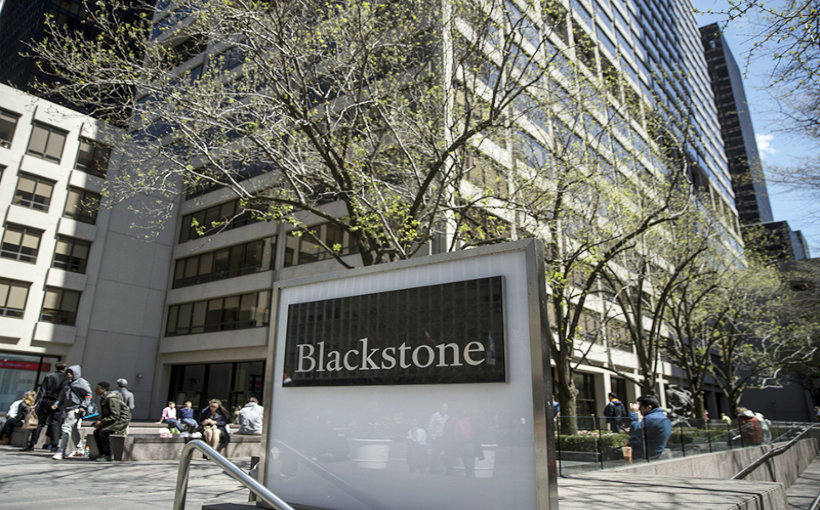

Blackstone Earnings Bogged Down by Mixed Real Estate Results
Blackstone’s investment fee-related earnings for the second quarter were down slightly to $1.1 billion, as reported in the firm’s earnings report released on Thursday. The decline was largely attributed to its struggling real estate portfolio.
Out of all of Blackstone’s alternative investment programs, the real estate portfolio was the only one to see losses in the past year. With $336 billion, it is also the largest program. The opportunistic portfolio experienced a negative return of 5.3% during the past 12 months, while the core plus program had a negative return of 3.1% through the conclusion of the second quarter.
Infrastructure, which is housed in the private equity business, was the top performing program with annualized gains of 21.6%.
“We are planting the seeds of future value creation,” said Chairman and CEO Stephen Schwarzman. “Blackstone is also in the early days of penetrating markets of enormous potential as a key solutions provider to clients and partners globally — particularly through large-scale investments in critical digital and energy infrastructure supporting the artificial intelligence revolution.”
According to Schwarzman, the firm had $40 billion of inflows and $34 billion of deployment during the quarter, indicating the highest level of investment activity in two years. The amount of dry powder has decreased marginally to $181 billion from $200 billion in the first quarter.
Although the investment portfolios had poor annualized gains, they had modest quarterly gains in performance and inflows. The performance of both opportunistic and core-plus funds was just below 1% each, but it was favorable. During the quarter, assets experienced a 1% growth, with inflows of $5.9 billion.
Debt assets remain strong. The team reported nearly $2 billion in capital flowing into Blackstone Real Estate Debt Strategies (BREDS) Insurance SMAs. BREIT also received an infusion of $903 million in new capital. In the quarter, BREP carried out the privatization of Apartment Income REIT Corp. and Tricon Residential, with the assistance of BREIT.
Private equity remains the second largest strategy sector, with an 8% increase in assets with inflows of $12 billion during the quarter, resulting in a total of $330.6 billion in assets. The performance was mostly influenced by the infrastructure sector, which attracted $2.9 billion in new investments during the second quarter.
The private equity sector achieved a strong performance, with annualized gains of over 11%. However, this was a modest decrease compared to the program’s performance in the first quarter. There was a 2% increase in earnings related to fees compared to the previous year.
Credit assets outperformed private equity, growing by 14% to $330 billion. Private credit had an annualized gross performance of 18.1%, while liquid credit increased by 11.4%.
The team raised about $2 billion more than in the first quarter, with inflows totaling $18.6 billion. Global direct lending drew the most interest, with $8.3 billion in assets raised during the quarter, while four new CLOs were closed, officials said.