



Inland Execs Discuss Self-Storage, Student Housing, Senior Living
The commercial real estate market remains in a state of transition given an environment with a higher cost of capital and constrained bid-ask spreads. These conditions necessitate a more adaptable and creative approach in deal structuring as investors strive to improve the operational performance of their assets.
“Office probably still has some challenges and retail has some headwinds as well,” Keith Lampi, president and CEO of Inland Private Capital Corporation (IPC) & Inland Real Estate Investment Corporation, told Connect Money. “But for every challenged sector, there are some interesting ones that have tailwinds. We remain keenly focused on nontraditional sectors like student housing, self-storage, senior living and healthcare.”
“While the playbook is a little different than 2008, we definitely want to double down on those sectors, as we weather this storm,” added Nati Kiferbaum, SVP, head of investment product strategy at IPC. “When we think about student housing, we’re very focused on the top 50 universities. High ROI universities are what we call it. When we think of self-storage, we’re focused on retail corridor, self-storage access and signage, with high vehicles per day. [With regards to healthcare,] we think about medical office and senior housing.”
Although price uncertainty may continue to exist and contribute to distressed sales, it is anticipated that these sales will be comparatively restrained in comparison to the magnitudes observed during the global financial crisis, according to IPC.
“While interest rates have come down, they’re not at levels where we’re seeing consistent accretive acquisitions. Capital structure stressed sales are driving much of that acquisition volume, which presents an exciting opportunity to invest in sectors that have had strong property fundamentals in this uncertain macroeconomic environment,” noted Kiferbaum.
“We’re focused on deploying capital as aggressively as we can in instances where we are seeing pricing dynamics being driven by sellers that are a little bit more distressed.”
Real estate investors have been forced to decide whether to hold onto underperforming assets until interest rates decline or to incur a loss now to prevent further losses in the future.
The reluctance of owners who lack an immediate incentive or pressure to sell has impeded sales transactions and constrained the ability of investors to negotiate prices on which buyers and sellers can reach an agreement. As the sector readjusts its expectations, however, investors are anticipated to resume making deals.
“Many buyers and sellers couldn’t come together because if you were a seller and didn’t like the buyer’s price, but you were having strong performance, it was easy for you to wait,” Lampi explained.
Today, however, the market is beginning to see a convergence among buyers and sellers with more certainty. “Transactions obviously propel not only our business on the 1031 and qualified opportunity zone side of things, but from a pure investment management standpoint, an increase in transaction volume means more opportunities.”
Moreover, the climate in which real estate investors are operating has become more favorable, helped by the recent progress on inflation and the likelihood of more accommodative monetary policy this year from the Federal Reserve and other central banks. A significant quantity of dry powder is available for deployment into the bottom of the cycle, and a rebound is anticipated in real estate transaction activity this year.
Property selection is always key, however. “It’s got to be a property we like. It’s got to be a neighborhood we like. It’s got to be a situation where we believe the rents will increase in the future,” said Joe Cosenza, Vice Chairman, The Inland Real Estate Group and President of Inland Real Estate Acquisitions, LLC. “Senior housing number one. Number two, self-storage, and number three, student housing.”
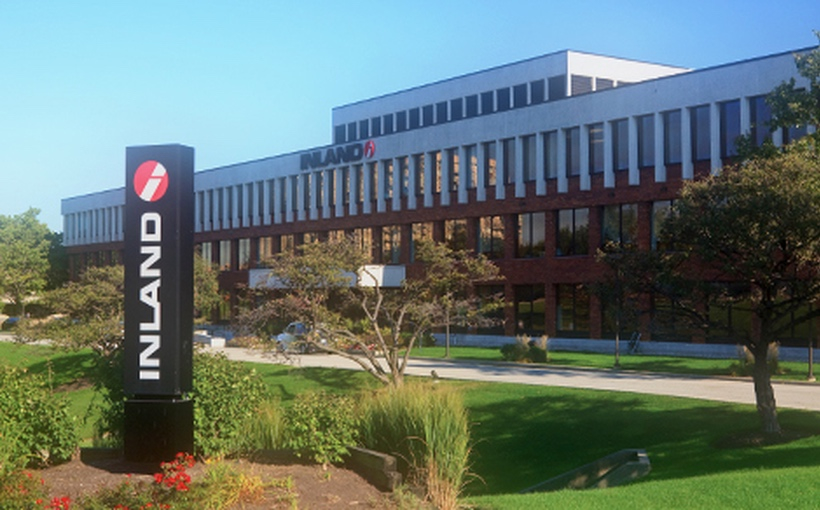
Pictured: Inland headquarters, Oak Brook, IL.
Please see Inland Private Capital Blazes a Trail in Tax-Oriented CRE Investing, Inland Sees Brighter Days Ahead for CRE and Behind the Deal: Inland’s Majority Stake in Devon Self-Storage for additional in-depth coverage of Inland Private Capital Corporation.