



Inland Sees Brighter Days Ahead for CRE
The mix of still elevated interest rates, at least compared to the recent era of near-zero rates, and inflation, which of late has proven stickier than expected, has kept some investors at bay.
However, volatility and risk bring opportunity. As pricing begins to take shape, there may be appealing opportunities to build and maintain strategic holdings in quality commercial real estate, particularly for investors with a long-term cyclical outlook.
Many investors believe the commercial real estate market is turning a corner and expect a comeback in fundraising, assuming no severe recession. In addition, the capital markets are showing signs of improvement, mitigating concerns surrounding interest rate volatility, which should lead to an increase in transaction volume in 2024.
Following two difficult years, the real estate price reset is anticipated to create opportunities. “Obviously, 2023 was a very challenging year when you look at where interest rates trended from the beginning to the end of the year. But we are seeing that trend reverse, leading to more dealmaking and increased appetite from lenders for commercial real estate,” Rahul Sehgal, Chief Investment Officer of Inland Private Capital Corporation (IPC), told Connect Money.
In the past two years, the markets have had to contend with longer periods for funds to reach their final close, and there have been fewer funds able to raise money. Yet, Sehgal sees the door beginning to open again for fundraising. “I see that capital raise is going to increase substantially in 2024, because what we saw as interest rates increased and as valuations came down, there were many people who just didn’t sell.”
“As the capital markets stabilize, we’re seeing an increase in transaction volume. And that transaction volume is not just what we’re acquiring, but also when you’re working with the 1031 investor, they must first sell his or her relinquished property before they would be looking at reinvesting. So that kind of works both ways,” explained Sehgal.
Some sectors in commercial real estate are well-positioned to weather economic challenges and make sense in the long run given diversification benefits and income characteristics.
In that respect, IPC’s preferred asset classes are those that offer inflation protection, including multifamily (specifically, the build-to-rent communities), self-storage, and senior and student housing. The firm has made nearly $9 billion in acquisitions in these sectors since their inception in 2001.
“Inflation was driving a lot of outsized performance in several pockets of commercial real estate. [In] self-storage, for example, we saw some of the highest year-over-year rental increases we’ve ever seen since the firm entered the storage market,” noted Keith Lampi, president and CEO of Inland Private Capital Corporation & Inland Real Estate Investment Corporation. “Multifamily had a lot of the same benefits. Student housing now is starting to harvest the benefits of being able to increase rents.
“The dichotomy was in a normal environment, rates increase, values should drop in a corollary way. But values held up, because the fundamental operating performance of many of these sectors was so healthy. I think 2023 was an era of transition, and now is when we will begin to have greater clarity of the road that lies ahead.”
“Those asset classes [multifamily, storage, student and senior housing] have done very well when you look at historic performance, but they also have resilient characteristics when not only looking at inflation but also tied to life events. For example, senior housing is not necessarily a choice, but sometimes a need,” added Sehgal.
“It’s the same with student housing. We focus on top-tier universities with diverse demand drivers. And what we’ve seen is not only enrollment growth, but we’ve seen substantial year-over-year rent growth in those universities as well.”
Meanwhile, demand for office and retail continues to face challenges. Owners have been faced with not only declining demand but also rising borrowing costs. This, in turn, has led to rising delinquencies and falling property prices.
IPC believes the challenges in those sectors are likely to persist. “While a lot of organizations are returning to the office, they’re not returning with the same level of regularity, which as a result has reduced their demand in terms of square footage requirement,” explained Lampi.
“Their space needs may not be quite the same. There are obviously geographical considerations to where corporations are moving or relocating. There’s a lot of uncertainty in retail and office, which is one of several considerations that drove us to residential and other alternative sectors.”
The Inland team is positive on the overall trajectory of the commercial real estate market in 2024 and beyond. “From a big picture perspective, the dislocation the commercial market has experienced presents tremendous opportunity,” said Lampi. In certain sectors, we see great opportunity to buy properties and settle into very attractive basis.”
“I say that with the premise that we always look at real estate through a long-term lens. If you’re a buyer that has a long-term vision, there is no shortage of attractive buying opportunities out there, and it should continue to be the case for a number of years.”
IPC is an affiliate of The Inland Real Estate Group of Companies, Inc., one of the nation’s largest commercial real estate and finance groups with over $55 billion in acquisitions and more than $80 billion of transactions to date.
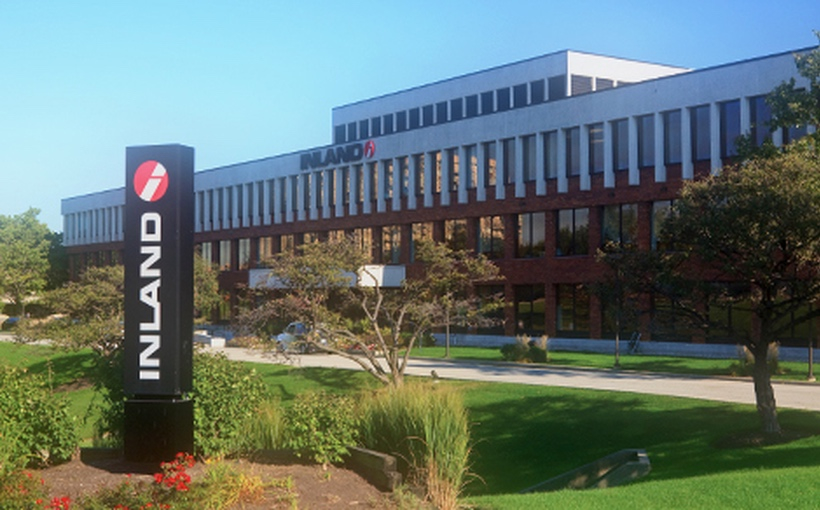
Pictured: Inland headquarters, Oak Brook, IL.
Please see Inland Private Capital Blazes a Trail in Tax-Oriented CRE Investing for additional in-depth coverage of Inland Private Capital Corporation.